Category Archives: Uncategorized

Crystal Surreal

Image

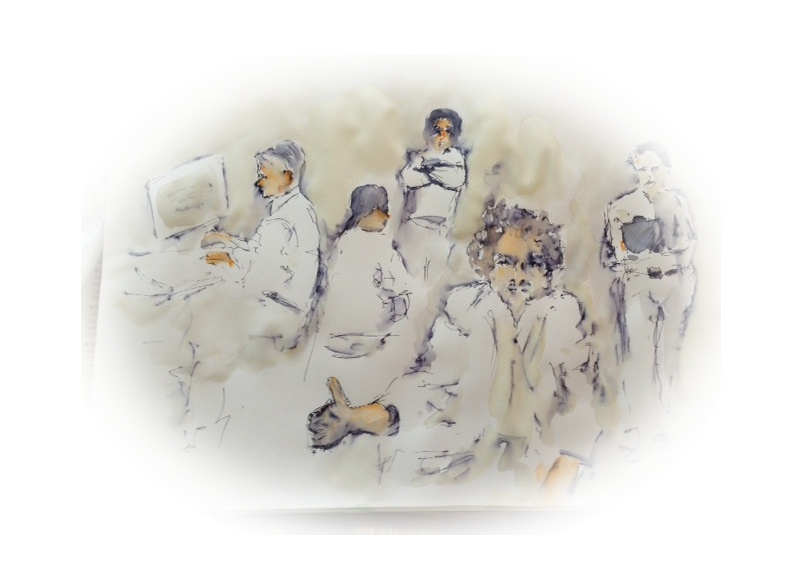
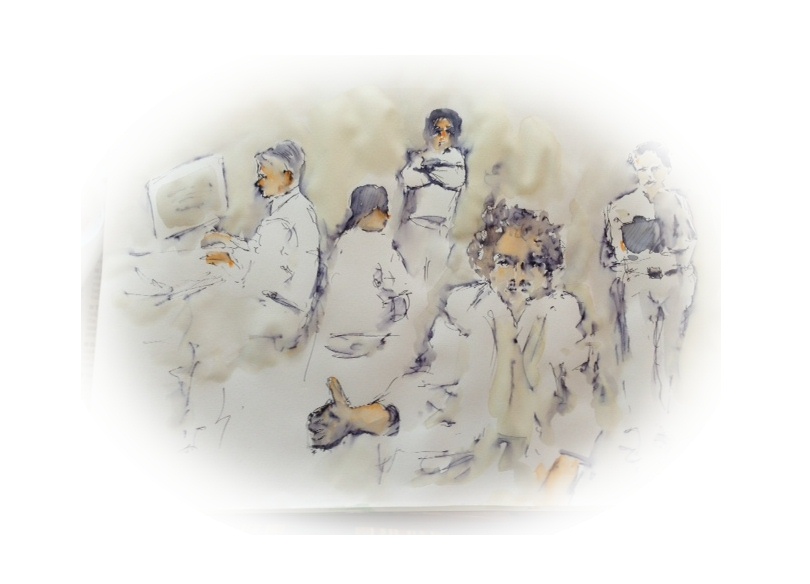
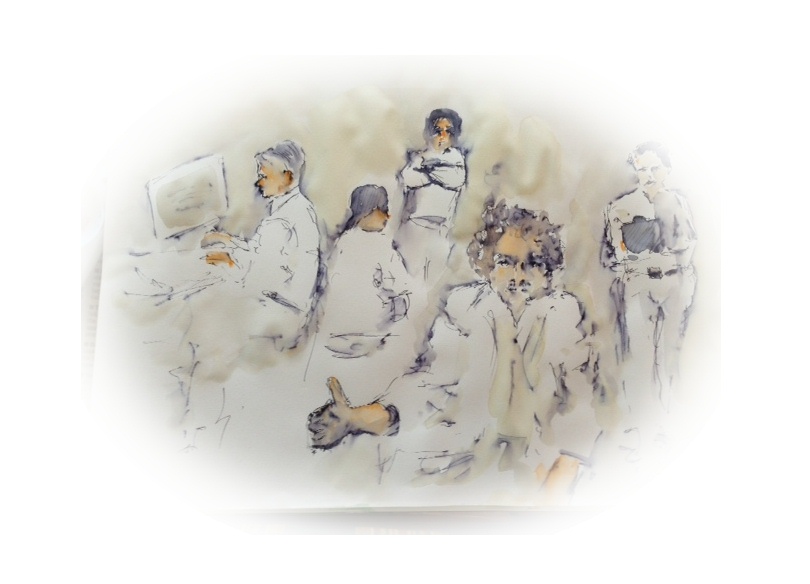
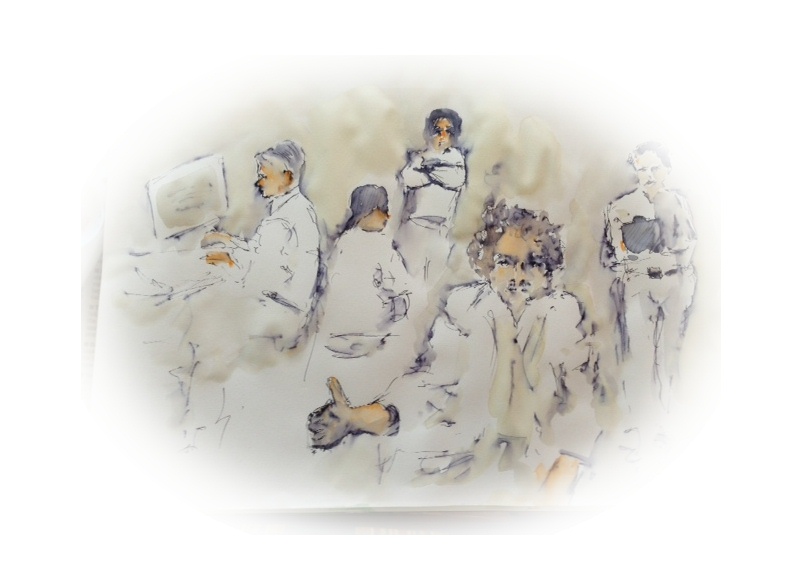
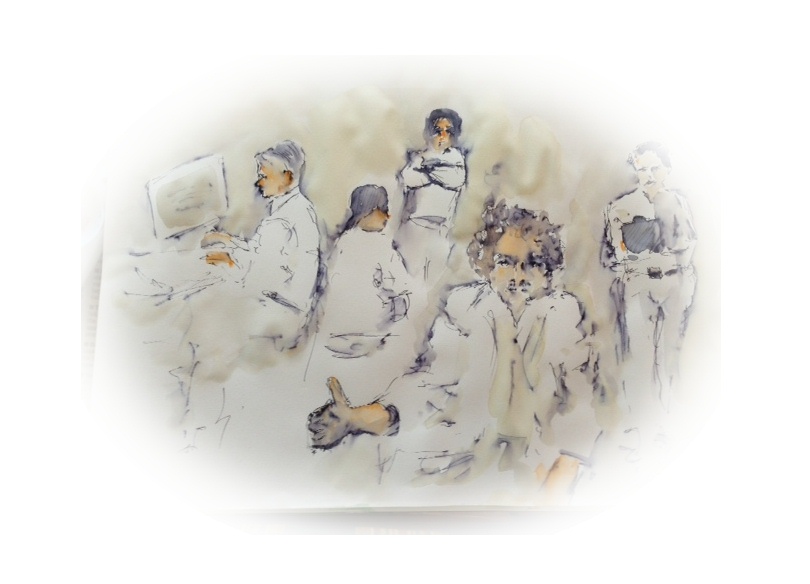
As my next novel, The Situation, becomes available today, I step back two years to reflect upon its predecessor, my much maligned Crystal From The Hills. You don’t have to read CFTH to get The Situation. It’s easy enough to follow the action, infer the major events of the previous novel, if not its subtext, and get involved in its story. What you might miss is the contrast between friends pictured above–the paths defined by different needs for both characters and readers: for mere consciousness on the one hand, for heroism on the other–for empathy above all. Who are you? Where are you in your life, and what do you want from drama? Here’s a few thoughts from November 12′:

I’m not sure what an example of surreal fiction is. When I think of surrealism, I think of painters like Salvador Dali, or filmmakers like Jean Cocteau, or Luis Bunuel. I’m told Jacques Lacan is the man for those following the unconscious. Not sure that’s true. The author Polizzoti writes that Freud and the surrealists were nonplussed by one another, especially Andre Breton, who reportedly met the Viennese physician and was underwhelmed. These writers were poets, stylists of the 20s and 30s, contemporaries of the absurdist Dada movement, and men who reported interest in the unconscious, and went about the task of creating images that simulated dreams. For what it’s worth, I’ve tried a modest and similar tact with Crystal From The Hills, having read some of Lacan and Breton, and then staring at that remarkable painting by Magritte: the one that frame a woman’s naked body within the contours of a feminine hairline. ‘Le Viol’ it’s called: the rape. Simplicity and genius. And horror.

Mine is a story that begins dreamily on the streets of Oakland, with an ambiguously aged man holding a sign that reads, “Hungry White Trash” as he panhandles by the side of a freeway. You might get the idea that it’s a joke, but not entirely. In fact, there’s a history to the joke, and horror: a serious underpinning. Chris Leavitt has suffered an accident. That’s the pitch, the beginning of the story and the forerunner to a back-story. There will be a few accidents depicted if you read on, as well as deliberate action, malevolent and kind. There is no hero per se (heroism comes later), just a hapless everyman riding a string of bad luck, making several wrong decisions, struggling to act like an adult. He’s playing with life. He has a girlfriend, sort of. It’s Jill Evans, ten years before her stints playing support character in Living Without Blood, and almost twelve years before she takes the lead in The Big No, my second novel. Jill gets around, and here she goes back in time, getting younger, lucky girl. I have a villain of sorts, a guy who’s not around, but who gets talked about a lot. He’s Weed, a drug dealer, video game star, con artist—a bad, absent, abandoning guy. His influence is balanced by Sweet, Chris’ other friend, who is even more childlike than Chris, yet affable and easy to have around. He sticks around. There’s an aged yet autocratic aunt—Chris’ only surviving relative, an endearingly caustic woman. Others in the story are lawyers, doctors, police, employers, street thugs, ghostly figures (dubbed “Shadows”) that hang around with hallucinatory menace: not all bad people; just people with seeming power and a willingness to use it.

            CFTH is a story that concerns itself with many ideas. It relies on continuity and the experience of ideas, fragments that have been indicated previously in the text. If you read a few pages then put it down for three weeks, then I’m sorry if I bored you. If that’s not the case and you’re just dilatory in your reading habits, then I’m afraid you may miss out. A good read is like good therapy. You don’t go once a month, like it’s a check up. You’re supposed to remember bits and pieces, like it’s embedded in your experience, and just know where you left off—no bookmarks are necessary if it works. There are associations to be made along the way. Don’t look for patterns, just experience the sense of revisiting as you note terms, phrases that appear to get repeated in the novel; themes that seem to link to one another. This is a story about accidents; personal, physical, even sexual, and habitual. It’s a story about rejection: also personal, and also institutional. There is trauma involved, and the problems related to poor memory and dissociation. You might feel what my characters don’t: that’s the point. Chris doesn’t remember much in the beginning, but builds his story along the way, and tells others, and you, what’s happening in his own time, on his own terms. His friend Sweet has an even worse memory than he does, but low and behold, it is he that becomes the chronicler of events in the end; the witness. Trauma victims need witnesses. That’s written somewhere. Above all there is a problem with reality, regressions in time, age. Characters aren’t sure what’s happening. They lack real perspectives, real goals. They don’t even use their real names. Despite all this, CFTH is actually not a confusing novel, in my opinion—not if you’re present, that is. It’s not all in Chris’ mind: things actually happen.

            Bad things happen. Evil lurks, as in any good action movie or pulp mystery novel. Darth Vader types hover, and towering infernos exist. Read the novel some of these cheeky references will make sense. Meanwhile, like the “Shadows” of Chris’ imagination or psychosis, the author and reader are witnesses to all that goes down. CFTH is a novel that may move you, or it may leave you cold, or I suppose—just to cover all bases—it may leave you feeling something (?) in between.
 

Leave a comment

Filed under Uncategorized

Feel Before You Think Or Do

Image

Think before you act. That’s culturespeak—dominant culturespeak, some say—for a certain brand of lay-counseling that infiltrates business and industry, schools, anger management classes, parent-child conversations, social cliques, young and old. Feelings? That’s a therapist word. Therapists are often counseling individuals to express feelings, use “I” statements that gird the framework for feelings, the growth of intimacy. Feelings.


Why are feelings important, actually? Many people, especially left-brain bullies who extol the virtues of logic, or compulsive survivalists who ever assert the need for action, often ridicule those who draw attention to an affective (emotional) underpinning to any given issue or conflict. Others still consider that giving weight or time to feelings, especially negative feelings like fear, guilt and shame, is an indulgence—an exercise in what some term “navel-gazing”. Given certain contexts (do I really need to enumerate them?), the weight given to thinking or action is appropriate, but all too often the ethos is extended, given inappropriate width, while underlying feelings are either dismissed or given pat, superficial meanings, such that individuals, couples and families—the world—can move on. The person who exhibits rage, behaves with violence, is likely someone who, when later asked about their feelings, speaks pridefully of feeling “disrespected”, but makes little (if any) space for the likely truer feelings: fear, hope; desires for closeness, the experience of danger or abandonment.


I’d like to give readers a practical example of why acknowledgement of negative feelings is important, and why the sustaining of feeling is also important. It’s a story of a couple that struggles to slow down and really communicate: In this anecdote, a struggling pair has made room in their busy schedules for a “date night”, which will include, among other things, a night of sex. Problem: their evening is intruded upon by one of the countless distractions in their lives. The woman receives a text—someone from work needs a call back. The husband, anticipating (based upon actual past events) that the interruption will be prolonged, sarcastically gripes, “Well, so much for our so-called night of intimacy.” The woman, feeling “disrespected”, assures him she will not be long, but resents his attitude, which she casts as “entitled”. Later she returns to him, and finds that he is pouting. The “date night” proceeds, sex included, but without the earlier goodwill and spontaneity.


In speaking to this couple, I challenge both to recall, possibly experience, consider and then lead with feelings, rather than focusing singularly upon “what do we do.” I challenge the husband to say what he felt when he first learned of his wife’s seeming distraction. “I was disappointed,” he says. Upon some expansion, I ask “What kept you from saying that?”

“I did,” he remonstrates fully believing he’d done all he could to connect with his wife on the night in question. “No you didn’t,” I argue—respectfully: “You made a sarcastic complaint to her, and later ‘pouted’ when she returned, saying little if anything about your true feelings.” He shrugs, transforms his voice into an affected whine, and says, “What am I supposed to say, ‘gee, I’m really disappointed that we’re not having sex’. I can’t say that.”

            “Why not?” I counter. This is where the therapy really begins.

            “Because that’s not the way I am; not how I was raised, to talk about my feelings.” Note the distancing of opinion, plus the excuse, the implied helplessness: I can’t. For the moment, I ignore the historical dimension (and the affected expressions) and stay in the present.

            “Why can’t you say that you’re disappointed, if that’s your true feeling?” After one or two more fumbling replies (this man is at a loss), he says, “I don’t know.”

            “What do you mean? You don’t know why you can’t express your true feelings, your full experience?” The man shrugs. I choose to help…this time.

            “You were disappointed that a planned evening of intimacy was disrupted. That’s understandable. There was an opportunity to say you were disappointed; to point out that your wife had agreed to devote the evening to a date and not work, and that you were anxious that work seemed more important to her than working on the relationship.”

            The man nods, understanding, but looks defeated. “I can’t say all of that. Or, I couldn’t remember all of that. I’m not that articulate. Could you say it again so I can write it down?”

            “It’s not about being articulate, or memorizing lines,” I reply quickly. “It is, however, about being in the habit of recognizing your true feelings, staying with them long enough so that thoughts and eventually words, may follow. (BTW: I level a similar confrontation at the wife) You experience a feeling—disappointment, and beneath that, the pain of rejection—and because that feeling seems so difficult to experience, you move to get rid of it as soon as possible. Thus, you use humor, aggressive humor, to distance yourself from both your wife and, more importantly, your own experience.”


** this example is a fiction in one sense, but in another, a coalescing of exchanges noted over time.

Leave a comment

Filed under Uncategorized

An Argument for Depth Therapy in Drug Rehab

Image


You might think that drug treatment with adolescents and psychoanalysis are terms that don’t go together, and you’d be right…sort of. Actually, a psychoanalytically-derived therapy is precisely what James Masterson, considered by many the father of adolescent psychiatry in the United States, intended for a residential treatment of troubled youth. His 1967 book, The Psychiatric Dilemma of Adolescence, offered the view that troubled kids do not “grow out of” problems of anxiety, depression, and acting out behaviors, as many of Masterson’s contemporaries appeared to assert. In this review, Masterson found that upon five years upon initial evaluation, over 50% of the adolescents previously treated in hospital settings for psychiatric conditions remained severely impaired. Although symptoms of anxiety, depression, and delinquent behaviors achieved modest reduction, some psychiatric disorders, such as pathological character traits, had not been touched upon in treatment at all.
Subsequently, Masterson was invited to take charge of adolescent inpatients at the Paine Whitney Clinic connected with Cornell University, which later resulted in his seminal text, Treatment of the Borderline Adolescent, in 1972. This book introduced the stage progression system of movement through a long-term residential program, intended to mirror the child development stages of separation-individuation as observed by Object Relations theorist Margaret Mahler. In this book, Masterson describes an initial “testing” phase of treatment in which patients relentlessly break rules or challenge staff, testing the limit-setting capabilities of staff, substituting them as parents (alloparenting, some call this), unconsciously determining who cares enough about them to maintain said limits and thus provide safety. The job of the therapists in such a setting is to convert patients from “actors and non-feelers” to “feelers and talkers”. Twenty years after this text was published, I began my career working in the field of adolescent drug treatment, though it was a further ten years before Masterson’s ideas really sunk in.
During my early years at Thunder Road in Oakland, a Therapeutic Community whose structure once bore a distinct resemblance to that described at Payne Whitney, I adapted to a cohesive treatment structure that more or less supported the Masterson approach (though few referenced him specifically), while adhering to the psychodynamic underpinning. Staff commonly used terms that were of psychoanalytic pedigree, such as “containment”, “splitting”, and “failure to thrive”; interns such as myself were repeatedly encouraged to observe transference (feelings in present relationships that are unknowing reflective of past relationships) meanings in the behaviors of patients, and more importantly, to attend to countertransference feelings in ourselves that may impinge upon therapeutic goals. Even staff not trained or educated in psychoanalytic concepts appeared to observe unconscious process in patients; in confrontation groups, counselors would routinely call out the negative behaviors, tease out the secrets of “acting out”. Then, upon the dropping of defenses, staff would zero in, often compassionately, sometimes not, upon the deeper meanings, the unacknowledged feelings.
For many in treatment this seemed not only fruitful, but also necessary, even exciting. They appreciated feeling understood. Furthermore, it seemed like common sense, this in-depth approach. Firstly, the adolescents lived in the facility and were kept clear of substances (at least, much more so than they otherwise would have been). There was clearly an opportunity for multiple therapy sessions per week, in various formats: individual, family therapy, and group. Even daily meetings were possible, and so the table was set for an in-depth therapy to occur. But the truth is that psychoanalytically-derived therapies, which call for an exploration of attachment patterns, links between family of origin memories and latter day behaviors, is frowned upon in many community mental health settings, even rehab settings wherein the intensive structure would seem tailor made for an in depth approach. There are several reasons for this, in my opinion: most concern either expediency or cost, but other reasons constitute a pronounced, if subtle devaluation of not only adolescent capacities, but also the dedicated staff that typically comprise drug treatment teams.
One assumption is that shorter term therapeutic orientations, solution-focused or cognitive behavioral therapies, for example, are easier to train to newer professionals. Their elements are easier to bullet point, sound-bite, and thus install into memory, left-brain functioning, versus the more unwieldy task of integrating a fuller experience. This is why many patients leave rehab centers armed with jargon, making glib pronouncements as to how they’ve changed; promises that all too often they cannot sustain. Often, these patients haven’t changed—not really. They’ve learned some “tools”, can parrot some phrases, maybe a few 12-step slogans. But their complex feelings haven’t about themselves and others haven’t changed, much less their understandings about those feelings. A second reason for the proscription of in depth therapy is that it is presumed to be cost-ineffective. But short term methods mean short-term outcomes, in my opinion, while short-sighted research conceals long-term effects, the attrition of growth that leads people back to rehab without understanding why earlier lessons didn’t stick. Reading this, a proponent of brief models would likely break out the sales pitch language and declare short term models “evidence-based”, and imply that psychodynamic models are not. This is untrue. Don’t believe me? Check out University of Colorado professor Jonathan Shedler’s comprehensive, 10-year meta-analysis research of over 70 studies upon the efficacy of psychodynamic models. It was published in the March 2010 issue of American Psychologist. It’ll open your eyes.
Regardless, especially in my latter years at Thunder Road, I experienced the unfortunate devaluation of psychodynamic models of care, and heard that similar things were happening at other programs. Managers began making philistine comments in staff meetings, deriding psychodynamic models as “that Freud stuff” while unknowingly using psychodynamic terms to reference current and longstanding practices. Few around me seemed to know or remember who James Masterson was, much less perceive his legacy within adolescent psychiatry. Borrowing models concurrently used in schools, clinical managers began using language connected with the Strength-based movement, which presumes a normative population of youth as the focus of care, emphasizes encouragement of adolescents’ strengths versus what is disparagingly termed a deficit-based approach. Thankfully at least, short-term models with worthy methods are coming to the forefront, muscling into the competitive arena of ideas. Most notable are the mindfulness-based therapeutic approaches, which are teaching affect (affect roughly corresponds to feeling) regulation skills (Important note: addiction is increasingly understood as a problem of affect dysregulation, not faulty cognition!), which draw their principles from advances in the area of neurobiology.


Leave a comment

Filed under Uncategorized

The Accident

Image

I wasn’t even running late. At a quarter to five, I had about a half hour to get to an office that was just over a mile away. The thing is that I had multiple things on my mind, such as the limited number of checks at my disposal that week. I’d just ordered more, but in all likelihood they wouldn’t arrive before several bills were due. Then there was the form I was to fax off to the hospital: my wife’s healthcare plan. Would I have time for a quick trip to Kinko’s? I wondered.
Driving alongside the high school, I glanced to my left, then to my right. As my eyes passed over the digital clock next to the steering wheel, I noted an SUV about thirty yards ahead of me, but thought nothing of it. It was a twenty five mile per hour zone, or thereabouts, not that everyone adheres strictly to that limit. I was going around thirty, possibly a bit faster, and the SUV? Okay, maybe it was slowing down, obeying the speed limit, being more attentive to the distractible teens ambling along the sidewalkless road. Meanwhile, as my thoughts converged on a narrowing lane of consciousness, one more managed to squeeze in: wait, is that car even moving? I was still traveling at thirty plus miles per hour. The SUV, my disbelieving eyes notwithstanding, had ground to a halt with its indicator light clearly on, signifying a turn it was patiently waiting to make.
There was no way, I thought—no way I’d avoid a collision. I was about ten yards away, and at the speed I was going, contact was imminent. Still, I slammed on the brakes, thinking I’d turn my car to its side and crash into the back of the SUV with my driver’s side door leading the plunge. Less damage, I figured–to the car? me? It didn’t happen like that. Moments later, after a split second wherein I’d resigned myself not only to a crash but also personal injury, the front of my car hit the bumper of the SUV, the impact jolting the vehicle forward as I came to a shuddering halt. There was little if any time to feel anything: no pain, no relief for not having pain; no time, even, to process the sound of metal crunching. Immediately, the driver of the SUV, an middle-aged man wearing glasses who resembled the haunted leading man of Breaking Bad, exited and marched—no, he strode—towards me. As he reached my door he stopped and looked down through my window, staring at my face. He flinched like he was tempted to reach out, grab the door handle, and then pull me from my car. Instead, he waited, chomping on the bit to say something unpleasant.
“I’m sorry, are you okay?” I managed miraculously as I rose from my car.
“I’m pissed off and feel like kicking your ass,” shouted the man, his glasses shaking. I was shaking too. Had I looked down I might have seen his fists clenched, held in check by his side, but poised to strike at the slightest provocation. I didn’t look down. There was none of that looking up or down, so to speak—none of those provocative right brain gestures. Instead my eyes glanced off his face and into the distance with fleeting connection. It was a reptilian act, this look of mine: aversive, escapist; seeking the still territory. Peace.
“Please don’t,” I simply replied. Other words came to mind, don’t get me wrong. Talking to others since this incident, I speculate that some combination of intuition and training, my attachment gifts or pathology, depending on one’s point of view, clicked in and took over. You see, there were rules afoot in the above described moment: rules that may apply to men and women, but especially to men. Rule one says that if you want to not escalate a dispute following a threat, you must not counterthreat. This isn’t difficult to understand. It’s somewhat harder to execute, of course, again depending on your point of view. Rule two, however, is more obscure, much less talked about, and in my opinion, almost exquisitely difficult to execute. Rule two says that if you want to diffuse a threat, you must not state or even imply that the aggressor cannot do what he or she threatens. In order to proceed safely, as my loved ones (especially the women) would demand, I had to bite down—as in bite down hard—on the following type of answer: oh yeah, why don’t you give it your best shot?
Call it fear. Call it training. Call it empathy. Call it self preservation. Something moved me, quite consciously I might add, to be short, reasoned, yet uninflammatory in my response. Over the next minute or so, the other driver and I exchanged information while my body decompressed, my nerves rattled, and my shame—my shame at being a bad driver, that is—percolated. My adversary was soon quieted, possibly disoriented, and five minutes later he was on his way, muttering that he or his insurance company would “be in touch”. Another kind of threat. On the one hand, he too may have seen the wisdom of not escalating: why risk trouble for an assault if a judgment of my fault regarding the accident was impending? Secondly, upon noting his own lack of injury plus the relative lack of damage to his vehicle (his got scratches; I got the worst of it), he may have been decompressing also, not to mention feeling relieved that he hadn’t lost control and struck me. As I proffered my license and policy, he may have felt my defeat, my two-fold humiliation: my implied acknowledgement of fault; my swallowing of his threat without reprisal or counter-provocation.
Within the confines of a subculture that places value, real value, upon the undefended experience of fear, I can feel unjudged, held, perhaps even admired. It’s one of the perks of being a therapist, the immersion into this kind of sensibility. Some will comment that by appealing for no harm, for myself at least and possibly for the other driver, I had demonstrated real strength. I had presented myself with dignity, acted like the bigger man.
Who knows if my now absented adversary will think of these things, process notions of masculinity alongside the experience of trauma, mine or his? I hope he will. From within my fantasy, I hope that he will recall the rage with which he initially approached me; the transformation in him that seemed to take place as he observed my shaken, non-threatening demeanor; my disarming yet unprideful statement to him. In my book, Working Through Rehab: An Inside Look at Adolescent Drug Treatment, I write about kids who might not even conceive of the lessons I draw from this accident. I write about kids with severe attachment pathology, long histories of violence, substance abuse to medicate feelings like fear and shame; a habit of psychic equivalence wherein feeling equals fact; a baseline bias towards survival in which time and perspective is shortened, split seconds become nanoseconds, and empathy—that capacity to feel into another and step outside of oneself—is forsaken. Observe the following passage from WTR:
“On the surface, it seemed to me that kids got into fights not so much because of gang rivalries or social marginalization, but instead because of more plainly interpersonal conflicts, such as that incident with Eddie and his hapless rival. Someone gets looked at the wrong way, and feels disrespected; someone’s shoulder gets bumped, and feels threatened, at risk of being a punk. For those feeling a surfeit of frustrations or humiliations in their lives, and without a place, the aptitude, or even the permission to speak openly of these stressors, “stupid stuff” becomes inflated in meaning. Seemingly trivial stressors are the proverbial straws on camels’ backs. As a result, thousands of clients have struggled their way through Therapeutic Communities walking a knife edge.”

**photo by Helnwein

1 Comment

Filed under Uncategorized

Adolescents and brain development: “Naming an emotion can calm it”

Image

Putting aside for now questions confidentiality and containment, matters of how to confront or otherwise engage kids about addictive use of substances, let’s turn to some research about human development which helps us understand child development and the implications for drug treatment. Last year, Daniel Siegel, renowned psychiatrist and neurobiologist at UCLA, published Brainstorm: The Power and Purpose of the Teenage Brain, a book seemingly aimed at an adolescent readership.
Siegel’s book touches on many subjects which affirm assertions I make in my own book, entitled Working Through Rehab: An Inside Look at Adolescent Drug Treatment. Firstly, Siegel explains the adolescent’s susceptibility to such things as novelty seeking, risk taking, the seeming observance of positive outcomes of behavior, coupled with the seeming disregard of negative consequences—all of which are characteristics of an addictive personality. He points out that during adolescence there is an increase in the activity of the neural circuits utilizing dopamine, a neurotransmitter central in creating drive for reward. A drug, alcohol for example, can lead to release of dopamine, and users may later feel compelled to drink further so as to re-trigger a dopamine release (the addictive cycle). When alcohol wears off, dopamine levels decrease, and those who become addicted experience withdrawal symptoms, and are then driven to use more of the substance that spiked the dopamine circuits (tolerance). Through phenomena such as pruning and myelination, humans are able to integrate functions of various areas of the brain—the cortex, limbic system, and brainstem—render it more efficient, and in particular consolidate skills around that which is repeatedly experienced.
And therein exists the problem for many who become addicted or otherwise troubled. Alluding to problems of attachment in early childhood, as well as social conditions that exacerbate feelings of disillusionment and disconnection, Siegel observes that many seem to become arrested in survival modes of thought and behavior, and therefore strain to develop skills that serve collaboration: so-called pro-social behaviors, reflective thought, and above all, empathy. They become prone to what psychoanalysts call psychic equivalence—the inner sense of conviction as to what others are thinking, leading to impulsive action. For the individual lacking what Peter Fonagy calls mentalizing skills (the ability to reflect upon another’s mind), even another person’s neutral responses are filled with hostility. Therefore, not only must those individuals not be trusted, they must be defended against, at all costs.
These were among the qualities that I observed repeatedly over my fifteen years working in adolescent drug treatment, in kids and sometimes parents; especially at Thunder Road, the Oakland facility wherein I worked until 2011. There were distinctive patterns of thought, feeling expression, and behavior that I observed, and which I depict and chronicle in my book. Siegel writes about many of these phenomena from a largely theoretical point of view. He describes the tendency for troubled kids to avoid their feeling states, to feel anxious but “get rid of the feeling”, rather than being open to learning about those feelings. In the dynamic between parent and child, he reminds us of feedback loops: the cycle wherein kids act out in some manner, producing negative consequences; adults react severely, exacting consequences that further stifle adolescents, who in turn rebel against the restrictions with further, perhaps even more egregious behaviors (BTW: I see this playing out with adult couples, also). Implicitly, Siegel affirms the premises of both drug treatment and psychotherapy (sometimes compatible entities, believe it or not) by indicating that in the brain, naming an emotion can help calm it. Here the psychiatrist is encouraging something that many resist. Indeed, hardly a week goes by without someone in my practice asserting that the problem is not so much “not talking about it”, but rather “talking about it.” The solution, according to the addict not in recovery, is not a sustained emotional release, but rather the opposite: silence and isolation.
Dan Siegel’s book, Brainstorm, is a useful affirmation of several ideas promoted in Working Through Rehab, though don’t get me wrong. I’m hardly claiming originality. In keeping with my sense of being a droplet in huge reservoir of information, my book contains well over a hundred references and endnotes. In the fourth of these articles devoted to adolescent drug treatment, I shall explore the territorial battle between theories of psychotherapy, and in particular, upbraid the narrow-minded, cynical, and even corrupt disregard of long-term, psychodynamic models of psychotherapy. As a preview, I’ll return again Siegel’s thoughts. In Brainstorm, he challenges the adolescent reader to reflect upon his or her past—the early attachment experiences—which are a staple of long-term, psychodynamic (as in psychoanalytically-derived) practice: “It makes sense for you as an adolescent to make sense of your life history so you can be as fully present as possible in your relationships. What this means is reflecting on your relationships in the past in your own family life and asking yourself how those experiences influenced your development.”


Leave a comment

Filed under Uncategorized

Servant of the Process: Team v. individual approaches in drug treatment

Image

What process? You mean the process of addiction? Do you mean the process of working with teens in a rehab setting? There are several elements of Working Through Rehab: An Inside Look at Adolescent Drug Treatment, that bear explanation. One of the more important features is this whole question of whether to treat the substance dependent individual (teen or otherwise) through a team approach or through the model of individual therapy. In a hospital-based drug treatment program, professionals assert that they work as part of a team which may include a variety of collateral contacts, each of whom may come from differing disciplines: therapists, teachers, doctors, psychiatrists—you get the point. If not characterizing a team approach, practitioners may use synonymous language, and describe their work as “systemic”. Among other things, it means that information drawn from patients, in individual, family, or group therapy formats, is shared with all members of a treatment team, in or outside of a program. The idea is to contain destructive behaviors, including but not exclusive to the addictive use of substances, and to uncover discrepancies in reporting by the patients. The premise is that addicts lie so the information they share with individual therapists is not reliable. As a result, traditional rules of confidentiality are loosened, especially with patients mandated through legal authority, such that the priority task—interrupting problem behavior—is more likely achieved. The argument goes something like this: since patient disclosures are unreliable, the traditional ethos of treating disclosures as sacrosanct is misplaced. Therefore, in a hospital or group home setting wherein therapists are operating from a “team approach”, individual counseling sessions aren’t really what they appear to be. There are invisible parties in the room.
For the most part, I have supported this therapeutic stance, especially on occasions (more numerous than not, actually) when it seemed obvious that patients were not truthfully reporting either cravings or continued using behavior. It has often seemed that if programs are to really intervene with a pattern of drug use, then it is necessary to maintain a skeptical position with a patient; to not get caught up in a patient’s denial system, and to consult with others—in short, to not get fooled. To work in a rehab setting and learn the ropes is to have the experience of being played by slippery drug addicts, over and over again, until this lesson is learned. Problem? To share information with colleagues and collateral contacts risks stalling or undoing the fragile trust-building that all therapists must achieve with their patients. So what, I hear the average drug counselor saying, especially those of the so-called old school variety. That trust-building isn’t happening anyway, they’d argue. After all, it is the addict, not those who live or work with them, who fail the exercise of trust. It is they who fail to trust others, family, friends, and helpers, by repeatedly not sharing the truth.
These are sound arguments that routinely bully therapists who otherwise hope to not waste their time with reticent, untrusting patients who will likely resist the spirit of help being offered. Despite my overall support of the “addiction model” ethos, I nonetheless think the arguments of individual therapists, particularly those working outside the addiction model, make compelling counterarguments regarding the loss of confidentiality. From this tradition, derived from a plethora of psychoanalytically oriented therapies, the patient in therapy must be assured that their disclosures will be treated confidentially. To do anything less would compromise trust and inhibit disclosures, rendering therapy an exercise in compliance—not meaningfully different from a relationship with a teacher, probation officer, or some other obvious figure of authority. Trust-building is a long-term task that can and should transfer to personal relationships, enabling meaningful dialogue about difficult subject matter over a lifetime. Trust-building isn’t simply a therapeutic nicety that will allow a therapist to have cordial exchanges with a reluctant patient. Secondly, and perhaps most interestingly, some argue that the containment bias of addiction model proponents sets up an artificial situation, one that is ultimately unhelpful to addicts and their loved ones.
To explain: one of the most difficult things for a loved one to say to the addict is something like “I don’t believe you. I think/feel you’re lying.” Fundamentally, it feels unempathetic and disrespectful to confront someone in this manner, and therapists usually feel a parallel dilemma: how to confront with tact while not rupturing the therapeutic bond. Paradoxically, many therapists have found that when they do confront lying behavior in patients, tactfully or not, it often improves the bond as opposed to disrupting it. Some of the best moments at Thunder Road occurred when committed staff, on the back of a solid bond with a difficult kid, pronounced its belief that the patient/addict was lying. This action, fraught as it is with anxiety and risk, enables the therapist to more fully empathize with the oft-gaslighted loved ones of addicts, those whose entire lives seem to revolve around similarly painful dilemmas: what can I say when my gut tells me something’s not right? What’s the easiest way to say I don’t trust you, don’t believe you?
No model of care is perfect or even close to being perfect. Addiction models and traditional psychotherapeutic models are not mutually exclusive, and don’t believe anyone who tells you they have evidence of what works and what doesn’t. They’re lying.


Leave a comment

Filed under Uncategorized

Fill My Holes, Please

You’ll have to get past, way past, the innuendo in order to read this one. But it is about sex, not drug rehab.

This is a story about the birds and the bees…and insects. I’m referring to Nymphomaniac, avant cinema provocateur Lars Von Trier’s last installment of what’s dubbed the “depression trilogy” (the other films are Antichrist and Melancholia). If you’ve heard anything about this controversial 4-hour, Volume I & II epic (apparently 5 hours in its uncut version), then you’re likely aware of the explicit sex scenes, the use of digital compositing to superimpose the genitals of porn actors over those of the film’s actors. You may be less aware of its dense symbolism, thematic complexity, and stridently taboo outlook.

Charlotte Gainsbourg plays Joe, the self-loathing title character, discovered beaten and bruised in the film’s opening scene by a diffident, scholarly recluse, Seligman, played by Stellen Skarsgard. Refusing either medical attention or help from police, Joe accepts Seligman’s hospitality, returning to his humble home, a sparse, shabby room, wherein she can rest, recuperate and, as it turns out, tell the long confessional story of her self-proclaimed nymphomania. From the outset, Joe makes it clear that she is ashamed of her sexuality, saying she has callously used people throughout her life, and that she therefore deserves the brutality she has endured. Seligman listens intently with a combination of sympathy and detachment—less a confessor than an analyst. No solution-focus in his repertoire. Still, he confronts Joe’s self-loathing, challenging with intellectual arguments that compare Joe’s behavior to that of an immature insect (the definition of a nymph, for viewers who don’t know). He also weaves in references to mathematics and religion, and in so doing, becomes a comic counterpoint to Joe’s compulsive hedonism, and also an unlikely listener. He is a forgotten kind of neutral: not only “non-judgmental”, he is a virgin, perhaps a eunuch.

Anyway, Joe seems to trust him, though she is irritated by his tangential curiosity in academic versus taboo or sensual matters. She attempts an argument that she is evil. His rebuttal is a proclamation of what is merely natural. Thus, Seligman is undisturbed by the story of Joe’s once teenage competition with a rival to see how many anonymous sexual conquests can be made on a train. As she recounts one presumably disturbing sexual episode after another, he maintains his cool, non-judgmental stance, ever keeping the horror at bay, ever blocking an imagined audience’s shock. The character of Seligman seems like a stand-in for Von Trier: fascinated, but rebutting society’s finger-wagging, defending sex. However, Joe is a tough, complicated patient/penitent. Her shame is powerful, but so too are her defenses. In Volume I, we learn of her “pact” with peers that entails the rejection of love. The compulsion to act out sexually is integrated into a philosophy that normalizes exploitation and quietly justifies an ongoing and progressive habit. In her confessional, Joe disdains sentiment, and alternates her self-loathing with fiercely defensive diatribes.

Volume I ends with a crisis of sorts: Joe’s sexual tolerance (in addiction terms) has peaked; she can no longer “feel anything”. In Volume II, after experiments with sado-masochism, among other things, the specter of “treatment” for Joe’s nymphomania is finally raised. But she rebels against the pedestrian and “bourgeois” therapist who prefers the term “sex addict” and who glibly counsels Joe to methodically abstain from her sexuality. After three weeks of abstinence, Joe stands up in a support group, subverts the implicitly rote exercise, proudly declares that she “loves her cunt”, and triumphantly walks out of the session. Shame? It comes and goes in this story framed largely around flashbacks. Only as she ages and the present-day telling begins does she contemplate the emptiness within her double entendres: “Fill my holes, please”.

And it is ambiguous when the shame began for her. As Joe tells the backstory of her nymphomania, a younger Joe is characterized as a somewhat blank, almost doltish (though not innocent) figure, played by novice actress Stacy Martin. As a teen and early twenty-something, Joe seems dissociative, not exactly there, whether seducing a future husband, Jerome, or scheduling-in a series of lovers into her daily routine. Even when confronted by a lover’s humiliated wife and pre-teen sons (a dark but comic scene featuring Uma Thurman), she seems unmoved and distracted. Meanwhile, Joe neither seems seductive or even flirtatious with men, mostly because it simply isn’t necessary for her to be so. It’s as if Von Trier is making an adjunctive statement about male sexuality, one that—from the POV of a man—makes for uncomfortable viewing: namely, that seducing men doesn’t require much effort, much less qualities like charm. To side-bar into something self-serving, she reminds me of my character Chris Leavitt from Crystal From The Hills, who I think is difficult to like or become interested in, largely because of his dissociated, secretive, not there qualities. Yet having readers like him is the task, wrapping backstory and more energetic characters around my wayward protagonist because the traumatized have an important story, whether they tell it well or not.

So it is with Joe, though because we meet her elder version as an articulate and wounded storyteller, we perhaps feel more hope for her character, and more understanding from her POV. Nonetheless, her sexuality is an enigma: there seems to be little joy or even creativity in Joe’s past or present scheming, such as we might expect of a womanizer. For example, when seemingly traumatized by the delirium tremens of her hospitalized and dying father, she ventures down into the belly of the ward and is soon naked, bucking rhythmically atop an anonymous orderly. For Joe, getting laid is about as difficult as finding a break room with a vending machine. I make this point because amid the controversies that Nymphomania will likely spark, few will draw attention to how men are depicted. That’s because this is a film about a female protagonist as directed by a man, and is dominantly about women’s sexuality, so no matter how unflattering this film may be of men, it’s still far more likely that Von Trier will be accused of misogyny.

Regardless, of all the provocative tidbits in Nymphomaniac (there are soapbox moments about pedophilia and race for example) I think the most important issue concerns the filmmaker’s apparent attitude towards the genesis of Joe’s nymphomania. Using Seligman as a mouthpiece, Von Trier essays that Joe’s affliction, if it is even to be called that, is a natural condition, versus, say, a proclivity borne of childhood sexual abuse, as might be supposed by many viewers. I will admit to supposing this, partly because trauma is the etiology of Chris Leavitt’s affliction in CFTH, but mostly because Joe’s father, played by Christian Slater, is an alcoholic to whom Joe betrays an element of Electra complex—I made a guess during Volume I that Joe’s attraction to the mechanically inadequate and even mathematically precise lover, Jerome (8 thrusts: 3 missionary, 5 from behind) is a reenactment. Alas, there’s nothing in the film to substantiate my interpretation. Von Trier’s position seems to be more or less a Freudian/Kleinien statement: an assertion that human beings are sexual as infants. Without apology, Trier eschews latter day speculations of traumatologists, not to mention polite society, which remains horrified, not only by pedophilia, but also by the notion that children can have anything like sexual feelings. Seligman’s mini-speech towards the end—an unfortunately trite statement declaring that, if anything, Joe has been oppressed by a patriarchal society—suggests a feminist sympathy and a rebuke of mainstream prurience. Maybe Von Trier remembered some things as he was writing this story. Maybe he felt ashamed.

Leave a comment

Filed under Uncategorized

What To Look For In Drug Rehab

Image

If you go to a 12-step meeting one of the slogans you’re likely to hear is “keep coming back”. It’s meant to welcome you, and be encouraging. And it is. But with respect to rehab, you don’t want to “keep coming back”. As a therapist of 20 years, I can’t tell you how many times I’ve heard something like the phrase “I’ve been going to rehabs for years,” from weary drug addicts who are still suffering, wanting to get clean. They are not so much unmotivated as stuck with something that is more than an attitude, and something closer to an embedded way of being: I want to feel better, not get better.

            Find a program that does not collude with this misguided goal. Here are a few tips and explanations:

1.)    First of all, size matters: the size (as in number of beds, # of patients participating in activities); the size of a case manager/therapist caseload. If a program has more than six beds, or offers groups with more than 8 participants, the tendency is for treatment to become unwieldy, possibly unsafe. If a therapist has more than half dozen patients on their caseload, it is unlikely they will have sufficient time to devote to one individual or family. I’ve observed these phenomena over many years, and depict numerous examples in Working Through Rehab.

2.)    Secondly, ask questions about the influence of patients’ rights groups, community licensing bodies. Some programs are more answerable to external regulators than others, which isn’t necessarily a good thing. In my book, I chronicle several instances wherein outside agencies influenced program procedures, often based upon societal norms, and not for the better. Often, accommodations served to enable problem-behaviors of substance abusers, not protect individual’s rights. This is a similar view to that offered in Dr. Drew Pinsky’s 2004 book, Cracked: Life on the Edge in a Rehab Clinic.

3.)    Thirdly, observe the proscription of depth therapy in rehab settings. Note the tendency of programs to sell short-term models that address behavior and cognition, but not underlying feeling states, maladaptive patterns of relating to others—attachment difficulties, and trauma. For example, anger management skills and mindfulness training are well and good, but they don’t address pervasive distortions of self and others. Furthermore, dovetailing with item #1, if a therapist is too preoccupied with multiple staff meetings, producing rote documentation, communicating with collaborators on largely pragmatic matters, in-depth focus with any one individual or family is more or less squeezed out.

4.)    Finally, hear with some distrust the phrase “fun in recovery”. This language is pitched to teens in order to get a buy-in, but while teen programs should include recreational activities, make no mistake: recovery, or meaningful change, is not fun. If you are a parent looking to place your child in rehab, I suggest the requirement of “fun” has not worked, and reinforcing this idea may have you or your child coming back, again and again.


1 Comment

Filed under Uncategorized

Effectiveness of Therapeutic Communities in Drug Treatment

ImageI

In a January 2014 issue of the Journal of Child and Adolescent Substance Abuse, within an article entitled “Therapeutic Engagement as a Predictor of Retention in Adolescent Therapeutic Community treatment,” authors offer that Therapeutic Communities (TCs) are effective in so far as they lead to reduced substance use along with reductions of other types of delinquent behavior. This isn’t a new assertion, nor is the apologist follow-up that much is still unknown in terms of what factors increase the likelihood that an adolescent will remain, much less thrive in treatment. Strange, since the Therapeutic Community model has been around for just over fifty years, ever since Synanon was founded in the late fifties to address problems of addiction. One might think that fifty years was enough time to give the Therapeutic Community model some scrutiny, some thought, and to determine what aspects of this somewhat controversial model work, and what aspects don’t. Well, it isn’t strange to me. Actually, when I consider all the elements of such a model (drawn from my fifteen years working within such programs), I try to imagine how a truly comprehensive research study might control for all factors. Therefore, it’s not surprising to me that the consumer of services is left reading research platitudes that beg a plethora of further questions.

            The efficacy of the Therapeutic Community model is one of several subjects I tackle in my book, Working Through Rehab: An Inside Look at Adolescent Drug Treatment. For those unfamiliar with the TC model, it is described by one notable researcher as the following: a total milieu treatment (as in residential) that promotes positive peer culture and socialization, with confrontation as a staple technique of the TC approach. How does that sound? If it sounds good so far, then okay. But if you’re reading from the point of view of somehow who might soon be living in a TC, or from the POV of a parent wondering whether to place your son or daughter in a TC, you’ll likely want to know more. You might take a look at literature on TCs that came out of Australia in 2010, though researchers Foster, Nathan, Ferry are similarly cautious about what is truly effective in therapeutic communities. Alternatively, you might want to tour such a place, take a moment to sit in one of its dorm-style bedrooms, and take in the atmosphere, the buzz. I remember the first time I toured a TC as a would-be employee. It was Thunder Road near downtown Oakland, and it was the mid-nineties. I took in the harsh noise of the unit that first day, as well as its tense silences. The atmosphere was one of anxiety, the restlessness of kids addicted to drugs, risk taking in general; the barely suppressed rage borne of thwarted freedoms and deeply-rooted yet thinly acknowledged pain. Through my book, I give readers a first-hand feel of how a typical TC operates. I’ll sit you upon its time-out devices, the bench, and have you gaze into its affirmation mirrors. I’ll give you a pair of hospital scrubs and strip you of your clothes and other belongings. Before long you’ll be sitting in confrontation group, or in something called contract breaking. Later, you’ll be doing some chores to keep you and your living environment both literally and figuratively clean. Then you’ll go to a 12-step meeting, and after that, maybe a family therapy session. You’ll learn that these norms, methods, and that the principles that underlie them follow a rigorous structure, and have a long pedigree.

            If you read studies about treatment models, you’ll likely come across terms like “completion rates” or “retention”. Within the literature pertaining to efficacy of programs, concepts like completion or retention are deemed tantamount to successful engagement of patients. If you complete a treatment of, say, 4-6 weeks (or longer), versus dropping out of treatment, then the treatment episode is implicitly effective, and a program looking to promote its services might refer to completion rates as indicators of success. Alternatively, programs might refer to studies (across programs) that demonstrate the efficacy of TCs in reducing substance use, though you might wonder about the methods of research. For example, if a person is said to be clean from substances post-treatment, how exactly is this determined? Is it through mandated submission to urinalysis testing? Or, are questionnaires being used: self-report essentially, from adolescents or their parental co-participants? Also, how long after treatment are the determinations being made? Are questionnaires being administered within 72 hours of discharge? Ninety days? Six months? I recall conducting post-discharge surveys for three different programs over the course of my fifteen years. The average length of time passed before conducting the surveys was about six weeks.

            Imagine your information is used for such a study (not that your name would be revealed). Think what it would be like for you if your treatment program was deemed successful because people like you completed the required number of days, or because you volunteered that you were still clean after eighty nine days. And even if that’s true, what if you relapsed on day ninety two? A program might benefit from the statistics, but what consolation would this be to those who slip back into old habits, and perhaps worsen from a previous baseline of addictive behavior? Many who go through drug treatment do so on multiple occasions, at great personal as well as societal cost. In future articles, I will address the problem of repeat customers in treatment, and argue for practices that aim for long-term change versus band-aid solutions and a low-bar, common denominator of treatment success. Long term, as in sustained change is what the consumer of drug treatment wants, after all. And it will take hard work, not to mention patience if treatment programs are to meet these standards. Studies of treatment efficacy that track change over time are few and—of course—far between. Exhibiting a quality that is perceived in most addicts, consumers of drug treatment research follow an ironic yet understandably urgent pursuit. They want the immediate gratification of fresh information, the latest studies. They cannot wait.


Leave a comment

Filed under Uncategorized

Exiting The Schizoid Program

Charlie Z., Candace Orcutt’s next case study from Trauma In Personality Disorder, seems at first to be living the life that schizoid personalities might envy: he lives alone, works with technology, and does not appear to have authority figures hovering over him. Then one day an intruder breaks into his apartment, pistol-whips him, and locks him in a closet, which later triggers associations with a childhood memory of being locked in a closet by his father as a punishment. The latter day incident immobilizes Mr. Z. His apartment, previously a haven, becomes as much a source of danger as the outside world. Sleep disturbance and panic symptoms follow; Mr. Z seeks medication, tries to use his intellect to reason through his fears. One foot in, one foot out, Mr. Z metaphorically and literally lives the schizoid dilemma in his apartment.

            In therapy it seems more or less the same: he reports feelings, says he’s in pain, but superficially describes the break-in event, and moves away from his feelings with plaintive questions, acting out in the form of lateness and canceled sessions. Candace delivers now familiar interventions: she assures him that memories fade, educates that his dizziness constitutes “remembering in the now”. Therapy eases his symptoms somewhat, but Mr. Z calls a halt to the sessions. Candace agrees, meaning she works with the disorder rather than resolving it. Nicely put, I thought, though I am once again struck by the way her cases stop and start.  

            Some time later Mr. Z. returns for therapy, ostensibly because his anxiety symptoms have returned, and Candace speculates that a new relationship with a female friend is the cause. This time Candace learns more about Mr. Z’s life, about his freelance work, his hobbies (science fiction—big surprise), and somewhat fastidious personal routine. She inquires after his new relationship, which is introduced first as a correspondence, but later graduates to a physical meeting, with all the attendant threats of closeness and sex. I like the way Candace uses Mr. Z’s comfort with computers as a bridge to negotiating a safe relationship. Actions can be taken but then undone; one can hit “escape” or exit a program, she reframes. This leads to further process about closeness, and Candace continues with interpretations of schizoid dilemmas. Eventually we learn more about Mr. Z’s childhood, about his being bullied into self-sufficiency by a rigid, perfectionist father and a passively cooperative mother. He resolves to think of them as cruel, and Candace offers speculations as to their own abuse history. I’m not sure what to write of these interventions, but was disappointed to learn that Mr. Z chose again to stop treatment. He reminds me of a Kafkaesque character transformed by his closeted life into some manner of human/rodent hybrid that’s ever hiding in the dark.


Leave a comment

Filed under Uncategorized