Sealed In The Memory

Now let me turn to another movie, similarly unconscious in its approach, but a movie that for me carries much fonder associations. 1971’s Melody (or Sealed With A Kiss–original UK title) is like a feral child scampering recklessly over its audience. The film paired then-child stars Mark Lester and Jack Wild, sort of fresh from their mainstream success with the oscar-winning Oliver, made three years earlier. Melody is set in contemporary London, as evidenced by an opening credits montage in which a camera pans over the Thames river, heading south towards a slumish neighborhood wherein the action will be set–probably someplace like Battersea or Lambeth. Viewers are introduced to the two male leads who are participating in something called Boy’s Brigade, a marching band. The character of Latimar, played by the angelic-faced Lester, seems sour and out of place. He mutters bitterly about his mother, who signs him up for activities like this without considering his feelings. At the end of the opening scene, said mother comes to collect Latimar and asks if he’s making any friends, at which point a boy named Hornshaw (Wild) opportunistically jumps into the back seat of their convertible. The characterization proceeds: the mother gives Hornshaw, a scruffy Jack The Lad type from the other side of the tracks, a sniff of class disapproval. Hornshaw winks precociously, begs a ride, and generally exhibits the rakish charm for which Jack Wild’s characters were briefly known in the sixties and early seventies. He is Mick Jagger to Lester’s John Lennon. The two boys later become friends, as it seems both are lonesome in their separate and wholly unexpressed ways. Meanwhile, back at the Latimar’s somewhat middle-class home, a rather contrived set of scenes follow in which social ambition, class snobbery, anti-Pakistani racism, and homophobia are feebly satirized. More successful, however, and certainly more fascinating, is the Oedipal drama that unfolds here. Latimar’s mother, who clings to her son in a manner that is subtly indecent, coos over his interests, especially his artwork, which include his debut efforts at painting a female nude. There is a hint of flushed response in the mother, who becomes tongue-tied and clumsy, breaking a model rocket her son has been working on. Young Latimar is passive and uncomplaining in this scene, yet he inexplicably shows his aggression when earlier lighting his father’s newspaper on fire.  

Hornshaw, on the other hand, is strictly working class, and as such–it is implied–is spared such neuroses as those which afflict Latimar. Unlike his budding friend, he is not concerned with individuation; the struggle to become his own person despite the self-serving needs of a parent. For Hornshaw, such dramas are past him, if they ever did exist. Apparently orphaned, he seems to be the caretaker for a grandfather figure who is referenced in the film but not shown. His are the demands of day-to-day life–cooking sausages for his grandfather, cleaning up–interspersed with seized freedoms away from home. Thus, at school Hornshaw is a rebel, and not just against common authority. Throughout the film, Wild’s character acts out an objection to modern education, questioning the utility of Latin instruction (favorite line: “I couldn’t speak to a dead Roman even if I knew the bloody lingo, Sir”); the condescension of student/faculty social activities; the arrogance of state-driven religious instruction. Many of his peers are like him: rambunctious, violent; ever dashing around looking for someone to hit, something to kick at or blow up with a cherry bomb. As a post-mod rocker deprived of a hippy milieu in which to protest, Hornshaw is destined to revolution, even if it’s only with a headmaster’s stolen cane, or a firecracker thrown into the seat of a teacher’s car.

Latimar’s revolt is gentler and more romantic. Thrown into the mix is Melody, played by novice actress Tracy Hyde, who is as beautiful and blank-slate looking as Lester. First, it is he that looks upon her like Romeo seeing Juliet for the first time. For several more scenes, we watch as the two children, both likely aged eleven, possibly twelve, meet each others’ eyes, gaze, and wordlessly fall in love. Significantly, their first proper scene together features them saying nothing to each other, but instead playing their musical instruments in tandem: a recorder for her, a cello for him. It’s also significant that Latimar appears to have abandoned home interests that might be intruded upon by his mother. There are aborted attempts by the two would-be young lovers to connect, but at first it’s the pre-teen peer group that blocks them. After all, the boys still think girls are stupid, school dances are fledgling, painfully awkward events, and as one of the female extras laughingly quips, “I thought kissing made babies!”

Today, this kind of ignorance, or sweet innocence if you prefer, would likely seem unrealistic. Kids of this age group today seem far more, uh, knowledgeable than perhaps their counterparts were forty years ago. Back in the early to mid-seventies, when I first saw Melody, I felt like the characters in the film: gleefully mindless, playful and wide-eyed…unknowing. Of course, I had no idea what to make of Melody‘s various subtexts, whether intended by the filmmakers or not.

The character Melody’s drama seems positioned somewhere between that of the boys. Socioeconomically, she seems aligned with the Hornshaw character, as her parents, a shrill, pedophile-fearing mother, and a beer guzzling, oft-absent father (played amusingly by Roy Kinnear), also seem decidedly working class. Not that Melody seems preoccupied with these curious and largely unexplained elements. Indeed, her character seems the most cheerful–that is, the least disaffected–of all the children in the story, which is perhaps one of the reasons Latimar likes her (“my parents are such a misery”, he later complains). That said, her cheerfulness transforms later in the film to cool defiance, and of the three main characters, she seems the most sexually mature, despite Hornshaw appearing to be older.

The ultimate rebellion is hers and Latimar’s decision to elope, which leads to the climax of the film: an impromptu wedding ceremony, Lord Of The Flies-style, under a railway bridge, with all of the kids in the film acting as witnesses. It seems symbolic, if silly from a practical standpoint, that this wedding takes place during school hours, nearby the school and with all of the kids wearing school uniforms, rather than on, say, a weekend, with everyone in plainclothes. Predictably, the forces of evil–sorry, the teachers–combine with one or two parents, like Latimar’s mother, to try and stop this institution and society-threatening event. The attempt of the baddies fails, naturally. The wedding comes off without a hitch. A great, iconoclastic battle between youth and establishment ensues, which youth sort of wins. Teachers get their comeuppance, and Hornshaw gets satisfaction. But the real victory belongs to young love, which is all Latimar needs. He and Melody escape the scene and disappear into the somewhere-in-London sunset, serenaded by a Bee Gees song on the soundtrack.

Melody is like a blissful dream born of sixties zeitgeist and pubescent wonder: one of my favorite examples of sweet, naive filmmaking that captures a bygone time and sensibility. Once gone from my memory except in fragments, I’d rediscovered the film in recent years on You Tube, and later purchased the DVD, complete with the scratched celluloid that betrays not only the film’s age, but also its discarded, forgotten reputation.

I wish I could be twelve all over again.

Leave a comment

Filed under Uncategorized

Unconscious Heat

It would not have been understood. My Thanksgiving thoughts, jaundiced as they may be, would have sprinkled awkwardly over the All American ambiance: an afternoon of football, the latest video games, the turkey dinner; the Hollywood movie. I’d stopped by the previous evening for the initial gathering of the clan. My arrival was greeted with good spirits, good-natured yet somewhat edgy verbal jabs. My neo-Hobbit hairstyle would take a hit over the next day or so; so too would my age, now halfway through its forties, but getting an advanced estimate by reps of the younger generation in attendance. It was a loving if unknowing occasion, with tight hugs all around to replace words that might get in the way of the basics. We are all living disparate lives, in truth: there’s a sense that everyone is nurturing ambitious ideas inside while being passingly aware of each others’ trials. The exceptions are those events that become known through soundbites: the busy working life, the tough job, the grades from the last quarter, and most thankfully–the successful operations. We substitute games for conversation, and play it safe with our vanilla “what’s new” overtures. The rooms in which we bond have little room for intimate talk, and in its place we are becoming stranger and ever more bizarre and unconscious in our repartee.

The after dinner mint was the aforementioned movie, much hyped as a comic action film to have us rolling about, guffawing in concert with contemporary pop culture. “We’ve seen it three times!” boasted one viewer, apparently eager to give it a fourth run. The would-be gem in question, The Heat, received proselytizing laughter throughout from guests predisposed to its appeal. However, it was in my opinion an excremental cop adventure; an exercise in casual misandry disguised as light, if vulgar comedy.  As buddy movies go, this flick was not without its social conscience, though it is this very conscience that should cause offense. Sandra Bullock plays a nerdy (but quietly “hot”, of course) and careercentric FBI agent saddled with an obnoxious partner, played by Melissa McCarthy. McCarthy’s character is a cross between Jabba The Hut and Roseanne Barr, and aimed at audiences who have at least forgotten who Barr is. Bullock is a gifted light comedienne of Mary Tyler Moore pedigree, and the juxtaposition of her act against the antics of McCarthy are tolerably entertaining for about a half hour. After that, the movie’s attitude becomes harder to stomach. 

About two thirds of the way through, the movie sort of announces that it has something to say about the mistreatment of women, especially in the workplace. This from a script which features, by my rough count, about a half dozen scenes in which men’s genitals are either shot at, maimed, or plainly insulted. High minded morals/hypocritical low humor, coupled with staggering inattention to irony: sadly, this is a Hollywood tradition, though I can’t remember the last time I watched a movie in which such comic cliches were resorted to quite as often. Then there’s an incongruous scene in which McCarthy’s character callously brushes off a former one night stand after grabbing the man’s face and kissing him aggressively. The joke here appears to be that she is an unlikely manizer. But what else is the point, I wonder?

Now, let us pause. Had I given voice to any of the above opinions at any time during the holiday festivities, then two things would have occurred: firstly, my comments would have been drowned out by the teasing over my use of unnecessarily 50-cent words like misandry (BTW: merely the analogue of the popularly-known word misogyny); secondly, I would have been taken to task for being ill-humored and over-analytical. “It’s only a movie,” some say, implicitly disrespecting an entire medium. I obviously disagree, and I’d put it to my nay-sayers that if The Heat had instead made light of violence towards women, especially sexualized violence, then each and every one of them would have thought it the cinematic atrocity that it actually is.

But the blinkered political correctness doesn’t stop there. Also of note are the racial demographics depicted. By my observation, there are three male characters in The Heat (out of many) who are not portrayed as being either villainous, stupid, or feckless. There is the Latino supervisor of Sandra Bullock’s character, a more or less decent, if disapproving man; a charming, if benign African-American character played by Marlon Wayans, who appears to have a crush on Sandra Bullock (this plot point goes nowhere–an indicator of scenes being cut, maybe); and a comic, though street-smart drug dealer, also African American. All the other men: White, Irish, or at least European-looking, are buffoons or villains. Again, if those demographics had been reversed, I’m convinced that many would and should complain, light comedy or not.

Full disclosure: a backdrop of this latter reaction is that I have been largely unexposed to the opposite trends which have no doubt persisted for decades. Though I know from childhood that Westerns have traditionally given a raw deal to Native Americans, for example, I have not followed the racial-profiling trends of action or action/comedy films nearly as much over the last twenty to thirty years. This is mostly to do with taste. Since becoming a discerning viewer, I simply have not patronized action movies with any kind of regularity, so I have not observed the raw deal that minority actors have gotten through movies with titles like–come to think of it–Raw Deal.

Regardless, this issue is a beta element, as psychoanalyst Wilfred Bion would have said–it is meaning drawn from a thin pastiche of life. The bigger issue is that of fragmented discourse in all units of society: across social groups, between branches of government…within families. The first pair of arenas are big sandwiches to bite into. Closer to home, I have to wonder, if privately, what the rules are for the youngest and, in all probability, least conscious of observers. At some point over the holiday, the youngest member of the dinner gathering, an 11 year old who seemingly enjoyed The Heat, learned that he would not be allowed to watch Monty Python’s classic Life Of Brian (admittedly, not a “light” comedy) because–get this–it features nudity. I held my tongue. Not my place, and all that. I guess the biases of this society are reflected in such moments, or else implied by a ridiculous movie ratings system. So, imagine the memorandum from studio heads to producers, directors, and writers: “penises can be blown off as long as they are clothed during the process.”


Leave a comment

Filed under Uncategorized

Graeme discusses plot points and themes from his novel, Crystal From The Hills, and introduces plans for a follow-up work.

Leave a comment

November 30, 2013 · 10:46 pm

Marshall Field Was Wrong

photo[1] (5)

The whole ethos of treatment shifted: customer service means saying things along the lines of “I’m sorry for your inconvenience, let’s see if we can fix that for you.” The therapeutic intervention is more like, “I see that you’re angry, let’s see if we can figure out what that reaction is about and also see if we can solve this problem.” The differences are crucial and multi-layered, and I don’t think non-clinicians (in many cases, policy makers) understand the differences. Therefore, managers were habitually striking impromptu bargains with family members, overruling clinical staff that had diligently counseled families about the importance of their participation. Invoking the flexibility mantra, a Saturday floor manager would grant full visiting to a parent that had missed required activities, and who had cited work or other supposedly unforeseeable conflicts. The activities stopped being required, in effect. Meanwhile, the only conflicts in these scenarios were the ones being habitually avoided. These parents that maneuvered their way around program structure: they had impassively heard the rules and structure outlined upon admission; they knew from experience how to maneuver within systems. They’d been doing it for years with schools, social services, employers and drug courts. They promised compliance up front but reserved their resistance for later times, when loop holes in the system had been cunningly assessed.

Claiming that which had been promised by case managers, who were often not around during visiting times, the splitting ruses started working and as a result, patterns of manipulation were reinforced. Flexibility indeed. The team approach was fostering increased instances of splitting, team fragmentation. The solution to this problem was to ignore it, and before long the term splitting seemed to become archaic; shuffled off to a TC concepts museum alongside benches, dusty hospital scrub shirts, image breakers and old man Bobby’s suspenders. If nearby the case managers might have intervened with the visiting day arguments, but increasingly they weren’t available for these kinds of situations either. The availability of case managers, to collateral contacts, to the electronic pull of computer screens, and not the kids in the program was of supreme importance, meaning therapists were sometimes even missing group therapy sessions in order to complete documents, or to meet with collateral contacts who sometimes visited the facility without bothering to make appointments. I’d never been asked to compromise my direct duties to clients—certainly not spontaneously—when I was a case manager. Some kids, meanwhile, complained that they were hardly getting to speak to their therapists. Were they customers? Clients? Consumers? Patients? Kids? I wasn’t sure what to call them any more.

Leave a comment

Filed under Uncategorized

The Trauma Wire

Image


Emotional amnesia. That was the term that flashed in my mind as I read Donnel Stern’s “Witnessing Across Time: Accessing the Present from the Past and the Past from the Present”. Starting with a familiar idea, Stern writes that for survivors “the past of trauma cannot be understood in the present”; that it is drained of vitality, and that memories lack “plasticity”. As practitioners, we experience this in the affectless way in which trauma patients recall life events. Of course, this article refers to several sources and therefore Stern is not the author of each idea. I won’t attempt to credit them all, but rather represent them as best I can.

A second kind of effect: that of contemporary trauma upon capacity to experience the past is the focus of much of this paper. The three clinical examples, one drawn from a fiction, feature situations in which a character or a real-life individual has experienced a contemporary trauma, and that trauma robs the past of any goodness. This is seen in the example of Michael, the character from The Wire. A positive memory of his saving a child from a gang, uttered by Dukie, the boy Michael had saved, is denied. The positive is forgotten. That life is gone, and goodness is dead. With Menachem, the child who is smuggled out of Krakow, we learn of another kind of trauma: the reunion with a mother who has been beaten down by war: sick, emaciated, barely surviving. Menachem’s experience of his mother violates the memory of her vitality, as preserved in the picture he’d kept of her and even prayed to—a witness of Menachem’s creation. Upon reunion: “Something accessible becomes inaccessible”. Meaning, the former memory is tainted. Thirdly, we read of Darryl, the amputee Vietnam veteran who enters therapy, but continues to act out violently after previously suffering a psychotic break while in combat (he fires his weapon at home, terrifying his family). Darryl seems good natured and quiet in sessions. He came from a family of origin that was warm and related, but trauma has soiled nurturing, and only in therapy can a good relationship be preserved.

So trauma distorts an experience of the present, spoils an anticipation of the future, and even robs the past of its once seeming integrity. Witnessing, the article suggests, holds the key to “retranscription”. I am reminded that secret-keeping, if sanctioned, is so because many assume that secrets (not speaking of the past) will protect individuals from pain. Stern’s article more or less echoes this, but adds that the absence of witnesses sends the message that no one cares. “Nobody ever gets over anything,” Stern quotes from a contemporary novel referenced as House of Meaning. The line is despairing, suggesting an absence of hope (or meaning?) for those living in the wake of trauma. Incidentally, the reference in his article contains a mistake. I happen to own the Martin Amis novel in question, which is about a love triangle in a Russian Gulag. The actual title is House of Meetings.


Leave a comment

Filed under Uncategorized

Talkin’ about Crystal

A discussion of the novel, Crystal From The Hills, and readers’ reviews

Leave a comment

October 11, 2013 · 5:18 am

Why Read Crystal?


That’s a marketing director speaking in my brain. Or, it’s an agent, sitting at a table in a hotel conference room, playing speed-date with scores of writers pitching ideas–trying not to look jaded. I’ve written several blogs on the subject of my novel, Crystal From The Hills, and have yet to really make my pitch for why you, the reader, should give it a shot. Here goes:

Are you interested in psychology; I mean, really interested, as in you read on the subject, are familiar with its language? If I spoke of things like chronic trauma, addiction, the ambiguously-termed mental illness, might you be intrigued? Probably not. Not enough, I hear you saying. Topical though, isn’t it? With episodes of mass shootings, ‘disturbed’ individuals entering school yards or driving their vehicles into capitol buildings, you might think it timely for someone to create a drama around a protagonist whose perspective is, shall we say, not quite reliable. But there’s that word: drama. You need action, don’t you? After all, there are lots of stories about ‘crazy’ people. You want something to happen, or else you need a reason to care about my protagonist. Is he a good guy, you’re wondering? A hero? Or, if not those things, is he funny at least?

What? He’s a loser? WTF? That’s the internal voice of that fidgety agent, that business-like marketing director, saying, “destined for indie!” Well, maybe I haven’t lost you yet, indulgent reader. My “loser”, protagonist Chris Leavitt, is…ya know, special. So are his friends, Sweet and Weed. Even his girlfriend, Jill, has something of interest to offer: something dark, yet compelling.

It’s something to identify with, or better yet, empathize with. See, that’s a psychology word for you: empathy. Can you empathize with feelings not expressed, but rather those that might be inferred from actions. Can you interpret? in other words. Difficult, psychologists say, because we are a telelogical society (judging that which we can observe–behavior), a scientific society (looking for that which is ‘evidence-based’). Judging the traumatized, the mentally ill is a challenge, because they do not express, or even experience their feelings, ordinarily. Rather, they act, and that ‘acting’ makes them enigmatic and sometimes dangerous.

And so, here is the challenge of following Chris Leavitt, a guy who has experienced an ‘accident’ about which he is alternately coy, misleading, or just unresponsive. He’s lost his truck and a friend–Weed–in an accident, and gives a short, unconvincing story to friends, who wonder, is Weed dead? Chris wanders aimlessly in the streets before being discovered by his girlfriend, who then returns him to her home. Though he is ostensibly clean from a previous methamphetamine habit, his life, in terms of his work and his relationship with Jill, is falling apart. And that accident? It is a mystery, but also a culmination of problems that have dogged him throughout his life.

Ok, so he’s not funny, not a hero, and not even a nice guy, necessarily. So what gives? Why should you care about him and his drama? Does he have a conscience, even? Or, is that trauma thing getting in the way of that too?

Sort of. Get ready for the paranormal element, incorporating aspects of Jungian psychology, spiritualism, near death experiences. Chris has shadows: ghosts in human form who appear fleetingly next to either victims or perpetrators of unidentified crimes, existing either as harbingers of future catastrophe, or representations of guilt. Chris sees shadows. He’s one of the gifted. But now they are dogging him, whispering cryptic warnings in his ear, steering him towards a mission that he must first understand, and then, act upon.

Do you care yet? Or, have I lost you. He’s looking at you, by the way, on the side of this blog. He’s an everyman, I guess, and his drama is an aphorism for something important. He’s someone to love at times, despise at others; perhaps, like most of us, he’s someone that elicits only passing interest, even attention–like Crystal’s shadows.


Leave a comment

Filed under Uncategorized

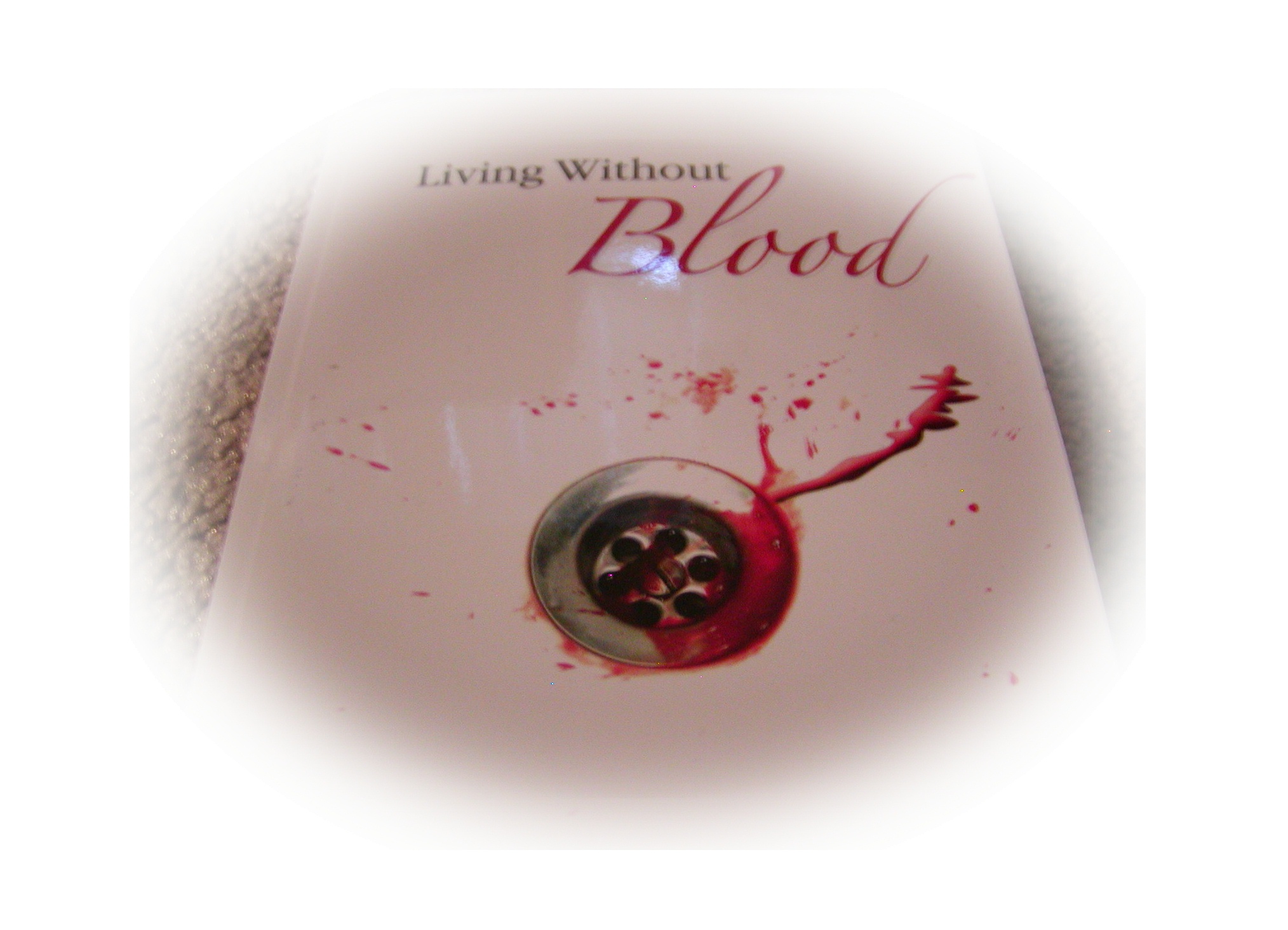
Living Without Blood

OLYMPUS DIGITAL CAMERA

When I think of trauma, I think of heuristic notions that I’ve fashioned in my mind in recent years and then spoken in sound-bites to clients and peers. My favorite—largely because it seemed catchy when I first thought of it—is one in which I address the saying, “time heals all wounds” by saying, “no it doesn’t. It is consciousness followed by honesty that heals wounds”. This was partly a reflection of reading (though I cannot cite the sources), partly a result of clinical observation, and largely a result of private experience. I’d simply known people (including myself) for whom thought, behavior, and feeling seemed frozen in time; memory fossilized as opposed to preserved—inflexible, and more importantly, not open to discussion.

            In recent years I’ve tended to think of trauma more in terms of feeling, of affect, rather than thought, memory, or behavior: listening to drug addicts “war story”; that is, recount the details of their drug use and the accompanying problems with flatness in their voices, or sardonic inflections as they spoke of the “crazy” aspects of their lifestyles. I reflect on my grandfather, a veteran of WWII, and more specifically, of the famous British evacuation of Dunkirk in 1941. As a kid I once innocently asked him to tell me about “fighting” the Germans (I didn’t realize it was more about the defeated—and likely shameful—running away from Germans). Granddad, as he was called, was curiously reticent about “fighting”, and was even more curiously without anger, excitement or sadness when speaking of his memories. Most curious was the specific memory that stood out for him: his anxiety about losing his weapon on the beach, mostly because that would have annoyed his officious sergeant. Years later my father explained that Granddad’s anxiety was compounded by the fact that he couldn’t swim. He had a dilemma on the day of the evacuation: attempt to swim and likely drown, or stay on the beach and get shot. His life was saved by that officious sergeant pulling him to a boat.

            Through reading and discussion, I learn that trauma manifests chronically with problems of hyperarousal and dissociation, and while symptoms of hyperarousal (such as panic attacks, nightmares, or startle response) may draw clinical attention more commonly, our attention should also be drawn to flat affect, inattention, so-called “shutting down” responses such as the dissociated client’s “I don’t know” or “I’ve gone blank” statements. From our reading of attachment research, we learn that the Hypothalamic Pituitary Adrenocortical Axis is a significant barometer of an individual’s response to stress: that when activated, a process follows wherein the Autonomic Nervous System is activated, and from that, a dissociation pattern which disengages the individual from stressful stimuli, rendering them “safe”, if maladaptive.

            If clinicians are to address these problems and help people, then psychiatrists and therapists must either interrupt the consolidation of memories, or else provide the safe context for the symbolic (as in verbal) expression of feelings. In terms of psychiatric intervention, we learn that pharmacology may have a role in the reduction of PTSD symptoms, which may in turn pertain to the consolidation of memories, the “freezing” of memories in tandem with emotional states. In terms of therapy, I recall Jude Cassidy’s 2001 article, “Truth, Lies, and Intimacy”, and her speculations upon trauma as a phenomenon that is exacerbated by the distortions that caregivers impose on memories, what I have fancifully termed “Hamlet syndrome” (It’s not just the murder of his father that is traumatic. It’s that no one’s speaking truthfully about it). This is bolstered by attachment research suggesting that those whose past traumatic episodes have been acknowledged truthfully (such as Holocaust victims) are more inclined towards secure attachments.

            In the Masterson model, we hear the broad suggestion that a clinician focus on deficits of the disordered self prior to working directly with trauma: meaning, the containing of acting out behaviors through the establishment of a therapeutic frame, the containing of transference acting out in the therapy, as well as destructive behaviors outside of therapy; the creation of a therapeutic alliance (TA).            What else do I want to know? Not sure, but the following quote from the Barbara Short chapter in Masterson (2005, P. 102) stirs my thoughts: “During times of strong affective arousal or dissociation, the therapist can reestablish contact with the patient best by not calling attention to the projective aspect of her experience. That has to come later, when the patient is in a more differentiated mental state.” This statement would appear to have significant implications for a model distinguished by attention drawn to defense, albeit in a sequence that proceeds from an empathic opening.


Leave a comment

Filed under Uncategorized

Your Cashier Today Was Self

Image


Christine did a double take as she looked at her receipt from the grocery store. Your cashier today was self, it read. A mistake? Little did she know that it was an indicator of the newly installed self-service check-out stations. Was it a joke? she wondered. Otherwise, everything was more or less as she expected: the milk, the beans, pinto and green, the chicken and the eggs, all cost about what she’d expected. Her coupons hadn’t worked on some items; they had expired already. She’d have to take the bananas to the express check-out, wherein there was a moment of self-disgust as one of the coupons  was again rejected. Stupid oversight, she thought, turning away briefly from the surly teenage girl at the check-out stand. Christine flashed on the girl’s face as she left the store. As she passed the receipt, there had been a stifled yawn, preceded by a slight grimace. Surrounded by food, this girl exuded contempt for the product. She was tall, enabling her to look down at people; and she was thin, painfully thin. The glance she made at Christine’s over-stuffed basket was fleeting. She passed the items over the screening device like someone holding their nose as they held at arm’s length a soiled diaper.

Christine showed the receipt to her mother as she returned home. Christine’s mother, also bemused by the phrase on the receipt, made a gruff, bemused sort of noise. “What’s that supposed to mean?” she asked incuriously. Mother’s questions often seemed like that: dismissive, judgmental rather than interested. “It’s…never mind,” sighed Christine. “She reminded me of Erica, though”. Mother was nonplussed. “Who did, dear?”. “The girl at the check-out stand,” Christine replied with a hint of impatience, thinking her mother obtuse; “The cashier, see?” Mother mouthed perfunctory acknowledgement, and then set the receipt aside. The two of them began planning for the evening meal. Christine’s sister, Fatima, was coming over, mother said, so they’d have to watch what they said about Erica, Fatima’s daughter. After finishing an inventory of ingredients, Christine said, “Actually, I think we should say something. After all, it’s not getting any better.” Mother gave Christine an evil eye, and performed her idiosyncratic motion wherein her forehead appears to recede to a lower angle. It was an effective illusion; a warning of imminent disapproval. “I don’t think so,” Mother decreed. “I do wonder what happened between her and that nice young man, Derek,” she instead proposed. Christine rolled her eyes. “Please, I think he decided to date someone who fed themselves properly.” Mother disputed the premise: “No dear, it was Erica who didn’t want to call him back. “Whatever,” said Christine rudely. “Sorry,” she immediately said afterwards.

Fatima arrived just as the meal was ready. As usual, Christine and her mother had prepared too much, and both had the habit of dashing back and forth between the kitchen and the dining table, ever looking to perfect the eating experience. “Want some more chicken?” mother kept asking of her daughters, despite the repeated refusals. “We should have added sour cream to this,” Christine would moan halfway through. Fatima, the cheerful younger sister, indifferent yet indulgent of her family’s obsessive ways, just smiled as she placed an obstructing hand across her plate. “How’s Erica, darling?” Mother asked, following the main course. Christine was “dear”; Fatima was “darling”. Why? Christine always wondered, thinking “darling” was preferable. She never said so. “She’s fine,” Fatima replied pleasantly, yet with deliberate shortness. Christine’s knife hovered above her plate; she was behind in her meal, having barely sat down in the last hour. She looked tentatively in her sister’s direction, and peripherally caught the eye of her mother. “Is she going seeing that Derek again?” Mother asked. Fatima paused, and was about to say something when Mother interrupted. “He’s such a nice young man, quite good looking.” Fatima’s face flattened slightly; her head tilted to an angle, as it often did when she was about to say something a bit patronizing. “That’s not what’s important to her, Mother. I don’t think she found him that interesting.” Mother’s eyes widened, like she was incredulous. “Well, I don’t understand. He seemed like a perfect choice to me. Maybe she should speak to Father Lopez.” Christine nodded, but touched her hand to her Mother’s wrist. “Maybe, but I think an expert may also be a good idea.” Mother’s expression narrowed. Confused, she thought: what did Christine mean by an expert?

“She’s not seeing anyone,” Fatima said succinctly. The placid smile remained, along with her shortness. She looked at her plate, which was empty finally, after several attempts by either her mother or her sister to re-fill it. She felt stuffed; fighting back nausea. “What’s for dessert, dear?” Mother asked. Christine licked her fingers clean of gravy, and skipped into the kitchen. In the freezer was her prize, the item she’d spent the previous day baking, and which she’d most looked forward to sharing: an almost two-foot wide, four-inch thick apple pie. “Looks great, dear,” said Mother as Christine delivered the pie to the table. Fatima inwardly groaned. Then Christine lovingly sliced two over-sized pieces, and set them down on plates for her mother and sister. She left her own plate clear. Fatima, with her fork dithering over the crust, asked “what about you, aren’t you having any?”. Christine rubbed her stomach, gave a beatific smile, and said, “Not for me. I’ve had enough.”

**photo by Helnwein

Leave a comment

Filed under Uncategorized

Crystal Surreal: Revisited


 Image

I’m not sure what an example of surreal fiction is. When I think of surrealism, I think of painters like Salvador Dali, or filmmakers like Jean Cocteau, or Luis Bunuel. I’m told Jacques Lacan is the man for those following the unconscious. Not sure that’s true. The author Polizzoti writes that Freud and the surrealists were nonplussed by one another, especially Andre Breton, who reportedly met the Viennese physician and was underwhelmed.  These writers were poets, stylists of the 20s and 30s, contemporaries of the absurdist Dada movement, and men who reported interest in the unconscious, and went about the task of creating images that simulated dreams. For what it’s worth, I’ve tried a modest and similar tact with Crystal From The Hills, having read some of Lacan and Breton, and then staring at that remarkable painting by Magritte: the one that frame a woman’s naked body within the contours of a feminine hairline. ‘Le Viol’ it’s called: the rape. Simplicity and genius.

Mine is a story that begins dreamily on the streets of Oakland, with an ambiguously aged man holding a sign that reads, “Hungry White Trash” as he panhandles by the side of a freeway. You might get the idea that it’s a joke, but it’s not entirely flippant. In fact, there’s a history to the joke: a serious underpinning. Chris Leavitt has suffered an accident. That’s the pitch, the beginning of the story and the forerunner to a back-story. There will be a few accidents depicted if you read on, as well as deliberate action, malevolent and kind. There is no hero per se, just a hapless everyman riding a string of bad luck, making several wrong decisions, struggling to act like an adult. He’s playing with life. He has a girlfriend, sort of. It’s Jill Evans, ten years before her stints playing support character in Living Without Blood, and almost twelve years before she takes the lead in The Big No. Jill gets around, and here she goes back in time, getting younger, lucky girl. I have a villain of sorts, a guy who’s not around, but who gets talked about a lot. He’s Weed, a drug dealer, video game aficionado, con artist—bad guy. His dark influence is balanced by Sweet, Chris’ other friend, who is even more childlike than Chris, yet affable and easy to have around. He sticks around. There’s an aged yet autocratic aunt—Chris’ only surviving relative, an endearingly caustic woman. Others in the story are lawyers, doctors, police, employers, street thugs, ghostly figures (dubbed “shadows”) that hang around with hallucinatory menace: not all bad people; just people with seeming power and a willingness to use it.

            CFTH is a story that concerns itself with many ideas. It’s a quick read, but one that depends on a certain momentum. Not many big words: nothing like “importunate” or “solipsism” in this one. I promise. But it relies on continuity and the experience of ideas, fragments that have been indicated previously in the text. If you read a few pages then put it down for three weeks, then I’m sorry if I bored you. If that’s not the case and you’re just dilatory in your reading habits, then I’m afraid you may miss out. A good read is like good therapy. You don’t go once a month, like it’s a check up. You’re supposed to remember bits and pieces, like it’s embedded in your experience, and just know where you left off—no bookmarks are necessary if it works. There are associations to be made along the way. Don’t look for patterns, just experience the sense of revisiting as you note terms, phrases that appear to get repeated in the novel; themes that seem to link to one another. This is a story about accidents; personal, physical, even sexual, and habitual. It’s a story about rejection: also personal, and also institutional. There is trauma involved, and the problems related to poor memory and dissociation. You might feel what my characters don’t: that’s the point. Chris doesn’t remember much in the beginning, but builds his story along the way, and tells others, and you, what’s happening in his own time, on his own terms. His friend Sweet has an even worse memory than he does, but low and behold, it is he that becomes the chronicler of events in the end; the witness. Trauma victims need witnesses. That’s written somewhere. Above all there is a problem with reality. Characters aren’t sure what’s happening. They lack real perspectives, real goals. They don’t even use their real names. Despite all this, CFTH is actually not a confusing novel; at least, not in this author’s opinion. It’s not all in Chris’ mind: things actually happen.

            Bad things happen. Evil lurks, as in any good action movie or pulp mystery novel. Darth Vader types hover, and towering infernos exist. If you read the novel some of these cheeky references will make sense. Meanwhile, like the “shadows” of Chris’ imagination or psychosis, the author and reader are witnesses to all that goes down. CFTH is a novel that may move you, or it may leave you cold, or I suppose—just to cover all bases—it may leave you feeling something (?) in between. Though, I suppose if you’re a Russian huckster or a peddler of dating sites looking to hijack a random blog site, none of this will mean anything to you. My art is an object and you are like rapists to me. Jean Luc Godard said of Weekend that it was like a film discovered on a scrap heap. Lucky scrap heap, I say. Perhaps, like the secrets of my protagonist’s past, CFRH may be found in a box one day: set aside, rejected; an obscure allegory by an obscure writer that aimed for the unconscious.  


**photo by Helnwein

Leave a comment

Filed under Uncategorized