Tag Archives: trauma

The Careless Passage of Time

Image

In the next section of Candace Orcutt’s book, Trauma in Personality Disorder, we read of Mr. H. and Mrs. M. Mr. H., she describes, presents a case with “traumatic overtones”, though the trauma isn’t obvious at first. Is it the rejection from his wife? The business failure, coupled with the partner’s nefarious financial actions? The problems with his adult children? He is depressed, Narcissistic, manifestly so (exhibitionistic?), and according to Orcutt, needful of mirroring, and not always with an accompanying interpretation. The Narcissist has an antipathy towards interpretation, she writes (p. 100), but she points out that the Masterson model bypasses this antipathy by wrapping such interventions with empathy for the patient’s vulnerability. With that seeming understanding in mind, one wonders why her transcripts appear to wander so often from the technique: instances of reassurance (p. 97: “it will get better in the end”, p. 91: “you have your kids and your pride. You’re managing”); so-called reasoning (p. 88: “Wouldn’t it be easier to stop fighting and accept the offer?”); a warning (p. 86: “Maybe it’s important to remember that reaction plays into others’ hands”); a confrontation (p. 85: “are you really defending yourself by turning this into WWIII”). The mirroring aims at maintaining idealized unity with the therapist; the confrontation a containment of acting out; the reassurance perhaps girds Mr. H. for his subsequent disclosures about an incestuous relationship with his mother. He ends therapy having broken a secret, and seems happy enough, with a new woman in his life and a better relationship with his kids. 

Orcutt writes that mirroring alone may be necessary when the patient is feeling especially vulnerable. This feels very permitting somehow, as though the interpretive piece were an extra chore for both patient and therapist; both are spared the task of dealing with the question of criticism that ambiguously lies within mirroring interpretations. Mrs. M is stoical, likes to “fix” problems. She seeks to control feelings, often by dismissing them, and thinks that having feelings and acting upon them are conflated concepts. She also discovers a family secret, through the experience of an accident in which no was injured, though Mrs. M. begins to suffer symptoms of PTSD. She wants medication, and hypnosis; she doesn’t want to dwell. She resists the psychologizing of her reaction from doctors, but soon integrates the therapeutic suggestion that her symptoms derive from stress, and more importantly, she acknowledges helplessness with respect to her fears. This appears to open up memories, including an incident in her teens wherein she felt responsible for a friend’s accident. Symptoms persist, and the therapist gives homework for Mrs. M. to interview family members about recurrent dreams of a little girl being killed. The investigation unearths a horrific family secret: a tragic incident in which Mrs. M’s four year old twin sister is accidentally killed by her mother’s first husband. Mrs. M. had witnessed the scene, but was thereafter amnestic, and the mother resolved to not talk about it. This is a painful story, one that had me reflecting sympathetically upon the father of the deceased girl as much as the horror of Mrs. M. She is distraught by the discovery, and blames the therapist for not preparing her for the burdens of memory. The therapist reassures that life will be put back “into one piece”, and adds that perhaps time will bring a change. Cliches aside, attributing change to the passage of time seems incomplete, even careless.
 

Leave a comment

Filed under Uncategorized

A Meeting of Trauma and Character

In a crude way, I think I have been caught within the divide that Candace Orcutt describes very well in Trauma In Personality Disorder.  For many years, while working in the field of substance abuse, I was assimilated into a clinical milieu that prioritized character work, more or less, while ignoring trauma work. Then, during the early part of the last decade, I was awkwardly moved to take the level I training for EMDR, the first third of which resembled a late-night infomercial. It was a heady atmosphere, with therapists and social workers enthusing over the prospect of diminishing symptoms in five sessions or less.

            Orcutt’s wonderful book is helping me melt the uneasy feeling that these two realms—character and trauma work—are mutually exclusive goals. No one ever said so directly, nor have I ever put that belief into words. But it’s been in the dialectics, somehow: the discussions between professionals working in teams, or voices heard at conferences, case presentations. Someone will speak of the need for boundaries, limit-setting with a patient, and on cue, someone else will counter with reminders about past traumas, the need for empathy and patience, as if these concepts were all at odds with one another.

I think it’s the same for readers of my novel, Crystal From The Hills. My protagonist, Chris Leavitt, doesn’t readily inspire empathy, largely because his characterlogical defenses (drug abuse, acting out, denial and regression) dovetail with dissociation, creating an aloof, if intriguing figure; a man who is difficult to reach, feel into.  

            I appreciate the breakdown of technique into the five steps: functioning, containment, strengthening, Cognitive and behavioral change, and insightful and dynamic change. There’s a common sense approach here, above all: the patient’s functioning, their surrounding circumstances, provides the “holding environment” for the work. An assessment of such circumstances is where the work starts. Secondly, containment: therapy draws attention to acting out, denying, blaming, substance abuse and other addictions, and the destructive consequences. In strengthening, a consciousness awakes, an afflicted individual starts to take responsibility; a therapist informs that setbacks may happen as a matter of the therapeutic process, or teaches relaxation techniques. The therapist doesn’t rush to provide insight ahead of the patient’s readiness. The patient realizes that the process of individuation occasions anxiety and sadness. Orcutt appears to paraphrase abandonment depression as part of trauma work.

            I appreciated Orcutt’s examples of confrontation of particular defenses. Most are readily understandable. It is even helpful to have each defense assigned a distinctive look and sound. The art of writing is to make ideas seem simple; the technique effortless. I know it isn’t. In the technique that is outlined here, the palette of interventions is widened. Therapeutic neutrality is flexed, and supportive comments and confrontations seem to live together in a therapeutic style. The case of Mrs. X called for many skillful interventions: confronting avoidance (p. 53, 55) and sustaining the thought as she defended against insight. Excellent. Integration is followed by a supportive comment from the therapist, a reminder that trauma distorts time, but that threats are no longer in the moment. Nicely illustrated. The case gets more vivid as Mrs. X becomes more anxious, starts calling the therapist in off hours, with panic about paralysis in her wrists, the fear that she is being held down. She abreacts. The therapist does some reality testing, followed by reassurance, encouragement. Reading this made me nervous, I have to say: this sounds draining.

            Yet the acting out isn’t done. Upon calling for hypnosis, Mrs. X “learns” of her father’s sexual molestation of her, and considers legal action, which would be undermined by the hypnosis, actually. In anger, she turns upon the therapist, who becomes a stand-in for a negligent mother. Like Chris Leavitt, perhaps, she is fascinating and disturbing all at once.

Leave a comment

Filed under Uncategorized

Fictions from memory

At the outset of a psychotherapy episode, a man referred to me by a trusted colleague outlines goals drawn from a course of group therapy: “I’d like to get to the root of my anger,” he says. I nod, affirming that this seems a worthy goal, though in truth I’m not sure what he means. I mean, I know what a root is, and I know roughly what is meant by the phrase he uses. But I feel uneasy, because I don’t know how to get to the roots of this man’s problem. I don’t think we’ll decide upon something; at least, not in the tidy, package way that treatment plans and opening discourses on therapeutic goals suggest. I don’t think that anyone would find roots to a problem in the sense of finding a definitive answer.

In the first five chapters of Paul Renn’s Silent Past and Invisible Present, the reader gets a review of neuroscientific thought relating to trauma, the formulation of memory; the history of psychoanalysis and its treatment of trauma; how it conceives of childhood memories as either the product of fantasy or else real life events. I am reminded that Sigmund Freud once attributed fantasy wish-fulfillment to patient who reported seduction by a friend of her father. While acknowledging the real-life event, the focus turns to the intrapsychic as far as treatment is concerned, and the case study appears to predict the later disputes between the likes of Klein, Fairbairn, and researcher John Bowlby.

We have declarative memory, autobiographical information that speaks to who we are, or who we think we are. Emotional memory, including thoughts and feelings operating in a relational context, shapes memory and fosters experience of reality. Trauma, the readings propose, distorts or inhibits play, wounds consciousness, and generates false equations, the psychic equivalence between internal reality and external reality. “I know for a fact that she hates me,” said a teenage client once to me. I could not have convinced him otherwise—not that I tried. This problem likely stemmed from the aggregate of events that could not be remembered in detail, or symbolized by verbal description. They were rooted in affect dysregulations, the creation of a false self as trained through misattunements. The amygdala of the limbic system will have been developed to interpret cues coming from early caregivers, process the fight/flight emotional response and provide emotional meaning, and activate memories such that they are experienced thereafter in the moment, as if time stands still. The Hippocampus, that evaluative organizer of information, is inhibited in times of trauma, suggesting a triage of tasks that strikes us as—what?—short-sighted? I suppose I could reflect on experiences of cold feet and sudden holes in my stomach to relate instances of my enteric nervous system influencing my own reactions—memories in my body.

In reading chapters four and five, which seem to recapitulate post Freudian psychoanalytic theory and the debates of its adherents, I note the familiar divides between the likes of Fairbairn and Bowlby, versus Freud and Klein. I continue to wonder if the disagreements were overstated, and that a difference in accent, as in the weight of focus, was most apparent. For example, could not an emotional attachment to a caregiver (Fairbairn, Bowlby) be thought of as a subset of drive theory, in so far as a libidinal gratification is derived from an attachment to a caregiver? After three years of intermittent exposure to this chapter of psychoanalytic history, my philistine curiosity laments, what was the fuss all about? I appreciate the author’s reminder about Winnicott’s notion of the “capacity to be alone”. It seems to me an eloquent statement of the value of silence, as experienced by two people sitting in a room together, experiencing a feeling. It’s not a shared experience per se, because the autobiographies are different, and because each person’s experience of emotion is different. But there are therapeutic values present: empathy, attunement, a witnessing. I think I have these experiences. Finally, I am introduced to the term hermeneutic: the understanding of subjective inner reality, with a distinction drawn between historical truth and narrative truth, between real events that might not have occurred, but are nonetheless “true”. This notion is a tantalizing one. It lets me off the hook from knowing, and I’ve always liked that aspect of my chosen business. The problem is: it lets me off the hook from knowing.

In my novel, Crystal From The Hills, Chris Leavitt copes with his traumas, recent and past, with distortions, and through play: it is play gone wrong for an adult male with responsibilities and a supposed bright future ahead of him. What he really wants is to go back in time, pretend nothing happened, both on an intellectual and emotional level, and start life over again. The problem, solution, and the hope, lies in the witnesses: the impromptu, reluctant therapists that are the people around him. He believes what has happened to him, whether it has or not, because it fits his narrative truth, and his courage–his happy, yet unsentimental ending–is in facing his distortions.

Leave a comment

February 2, 2014 · 8:39 am

The Trauma Wire

Image


Emotional amnesia. That was the term that flashed in my mind as I read Donnel Stern’s “Witnessing Across Time: Accessing the Present from the Past and the Past from the Present”. Starting with a familiar idea, Stern writes that for survivors “the past of trauma cannot be understood in the present”; that it is drained of vitality, and that memories lack “plasticity”. As practitioners, we experience this in the affectless way in which trauma patients recall life events. Of course, this article refers to several sources and therefore Stern is not the author of each idea. I won’t attempt to credit them all, but rather represent them as best I can.

A second kind of effect: that of contemporary trauma upon capacity to experience the past is the focus of much of this paper. The three clinical examples, one drawn from a fiction, feature situations in which a character or a real-life individual has experienced a contemporary trauma, and that trauma robs the past of any goodness. This is seen in the example of Michael, the character from The Wire. A positive memory of his saving a child from a gang, uttered by Dukie, the boy Michael had saved, is denied. The positive is forgotten. That life is gone, and goodness is dead. With Menachem, the child who is smuggled out of Krakow, we learn of another kind of trauma: the reunion with a mother who has been beaten down by war: sick, emaciated, barely surviving. Menachem’s experience of his mother violates the memory of her vitality, as preserved in the picture he’d kept of her and even prayed to—a witness of Menachem’s creation. Upon reunion: “Something accessible becomes inaccessible”. Meaning, the former memory is tainted. Thirdly, we read of Darryl, the amputee Vietnam veteran who enters therapy, but continues to act out violently after previously suffering a psychotic break while in combat (he fires his weapon at home, terrifying his family). Darryl seems good natured and quiet in sessions. He came from a family of origin that was warm and related, but trauma has soiled nurturing, and only in therapy can a good relationship be preserved.

So trauma distorts an experience of the present, spoils an anticipation of the future, and even robs the past of its once seeming integrity. Witnessing, the article suggests, holds the key to “retranscription”. I am reminded that secret-keeping, if sanctioned, is so because many assume that secrets (not speaking of the past) will protect individuals from pain. Stern’s article more or less echoes this, but adds that the absence of witnesses sends the message that no one cares. “Nobody ever gets over anything,” Stern quotes from a contemporary novel referenced as House of Meaning. The line is despairing, suggesting an absence of hope (or meaning?) for those living in the wake of trauma. Incidentally, the reference in his article contains a mistake. I happen to own the Martin Amis novel in question, which is about a love triangle in a Russian Gulag. The actual title is House of Meetings.


Leave a comment

Filed under Uncategorized

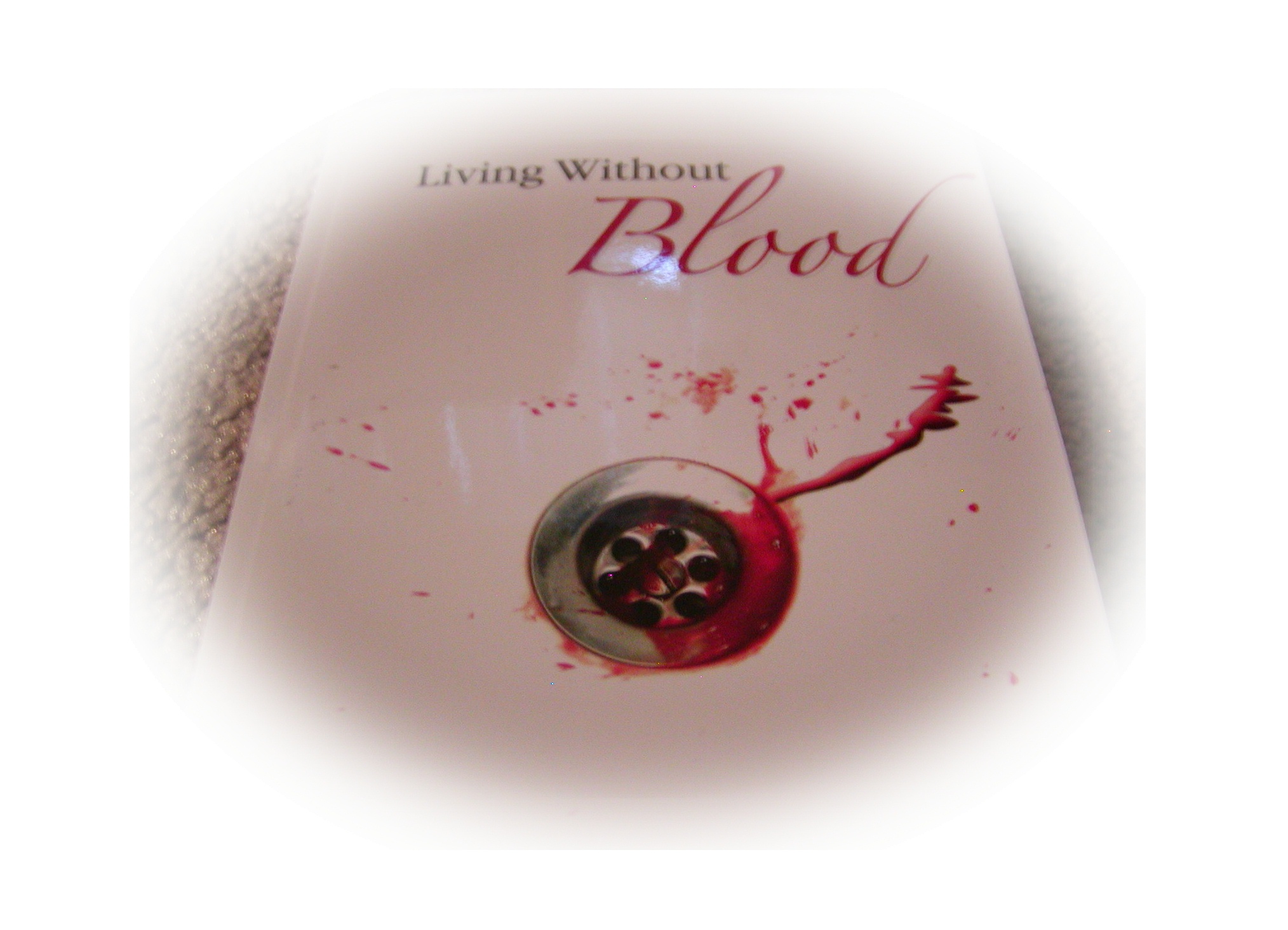
Living Without Blood

OLYMPUS DIGITAL CAMERA

When I think of trauma, I think of heuristic notions that I’ve fashioned in my mind in recent years and then spoken in sound-bites to clients and peers. My favorite—largely because it seemed catchy when I first thought of it—is one in which I address the saying, “time heals all wounds” by saying, “no it doesn’t. It is consciousness followed by honesty that heals wounds”. This was partly a reflection of reading (though I cannot cite the sources), partly a result of clinical observation, and largely a result of private experience. I’d simply known people (including myself) for whom thought, behavior, and feeling seemed frozen in time; memory fossilized as opposed to preserved—inflexible, and more importantly, not open to discussion.

            In recent years I’ve tended to think of trauma more in terms of feeling, of affect, rather than thought, memory, or behavior: listening to drug addicts “war story”; that is, recount the details of their drug use and the accompanying problems with flatness in their voices, or sardonic inflections as they spoke of the “crazy” aspects of their lifestyles. I reflect on my grandfather, a veteran of WWII, and more specifically, of the famous British evacuation of Dunkirk in 1941. As a kid I once innocently asked him to tell me about “fighting” the Germans (I didn’t realize it was more about the defeated—and likely shameful—running away from Germans). Granddad, as he was called, was curiously reticent about “fighting”, and was even more curiously without anger, excitement or sadness when speaking of his memories. Most curious was the specific memory that stood out for him: his anxiety about losing his weapon on the beach, mostly because that would have annoyed his officious sergeant. Years later my father explained that Granddad’s anxiety was compounded by the fact that he couldn’t swim. He had a dilemma on the day of the evacuation: attempt to swim and likely drown, or stay on the beach and get shot. His life was saved by that officious sergeant pulling him to a boat.

            Through reading and discussion, I learn that trauma manifests chronically with problems of hyperarousal and dissociation, and while symptoms of hyperarousal (such as panic attacks, nightmares, or startle response) may draw clinical attention more commonly, our attention should also be drawn to flat affect, inattention, so-called “shutting down” responses such as the dissociated client’s “I don’t know” or “I’ve gone blank” statements. From our reading of attachment research, we learn that the Hypothalamic Pituitary Adrenocortical Axis is a significant barometer of an individual’s response to stress: that when activated, a process follows wherein the Autonomic Nervous System is activated, and from that, a dissociation pattern which disengages the individual from stressful stimuli, rendering them “safe”, if maladaptive.

            If clinicians are to address these problems and help people, then psychiatrists and therapists must either interrupt the consolidation of memories, or else provide the safe context for the symbolic (as in verbal) expression of feelings. In terms of psychiatric intervention, we learn that pharmacology may have a role in the reduction of PTSD symptoms, which may in turn pertain to the consolidation of memories, the “freezing” of memories in tandem with emotional states. In terms of therapy, I recall Jude Cassidy’s 2001 article, “Truth, Lies, and Intimacy”, and her speculations upon trauma as a phenomenon that is exacerbated by the distortions that caregivers impose on memories, what I have fancifully termed “Hamlet syndrome” (It’s not just the murder of his father that is traumatic. It’s that no one’s speaking truthfully about it). This is bolstered by attachment research suggesting that those whose past traumatic episodes have been acknowledged truthfully (such as Holocaust victims) are more inclined towards secure attachments.

            In the Masterson model, we hear the broad suggestion that a clinician focus on deficits of the disordered self prior to working directly with trauma: meaning, the containing of acting out behaviors through the establishment of a therapeutic frame, the containing of transference acting out in the therapy, as well as destructive behaviors outside of therapy; the creation of a therapeutic alliance (TA).            What else do I want to know? Not sure, but the following quote from the Barbara Short chapter in Masterson (2005, P. 102) stirs my thoughts: “During times of strong affective arousal or dissociation, the therapist can reestablish contact with the patient best by not calling attention to the projective aspect of her experience. That has to come later, when the patient is in a more differentiated mental state.” This statement would appear to have significant implications for a model distinguished by attention drawn to defense, albeit in a sequence that proceeds from an empathic opening.


Leave a comment

Filed under Uncategorized

Everything We Love Vanishes

Image


A quote from W.B Yeats. In The Silent Past and the Invisible Present, Paul Renn writes about the traumatized, the pathological mourning of those whose ambivalent yearning for and anger with attachment figures becomes dissociated; split off and embedded into personality. Through Renn’s case examples, the reader learns that those with attachment difficulties, personality problems, are beset with distorted representations of self and others, and that time is lost; meaning, past and present become conflated experiences: the past denied, but acted out in the present. In Crystal From The Hills, protagonist Chris Leavitt (nicknamed Crystal) is an itinerant trauma victim, suffering from (among other things) post-acute withdrawal resulting from (you guessed it!) methamphetamine use. He is unconsciously playing out a conflicted identification with absent caregivers: a distant, self-absorbed father, and a protective yet similarly detached and secretive mother. The backstory has yielded his character and thus the first two-thirds of the novel, his “acting out”. Chris tries to be “nice” in life, but as often as not his attempts are disengenuous, especially when dealing with authority. His mentor, Aunt Jenny, advises, “there’s nothing nice about being nice”, articulating the demand that he be real. And he has acted out upon anger: Chris’ problems at work–his “suspension” for insubordination–reveals his impulses, his sporadic rebellion against authority figures and systems. More sinisterly, his present-day drama contains a mystery: the disappearance of his friend, the malevolently reptilian Weed. Chris is noticeably evasive. If attentive, the reader must consider some dark possibilities as the mystery unfolds: is Chris psychotic? a killer? a rapist, even? Meanwhile, ambivalence thwarts Chris’ other ambitions: sleep disturbed, his dreams are interrupted, and his perceptions are marred by visions, his so-called “shadows”. His ideas, such as his strange and somewhat silly diaper invention (an indicator that his dreams entail regression) are tentatively delivered, but easily withdrawn or dismissed with self effacing humor. Back in the day, he once tried to be an actor, and still does affect the odd scene here and there (incongruous quotes from film or literature), but surely the best actors must first be grounded in reality, and reality, through no fault of his own, actually, has also been elusive.

Above all, Chris has failed at love, just as his father had. That is, Chris has tried to sustain love and relationships, but the truth is that parents, friends, women, have all left. And so the story begins upon a two-fold leaving: the disappearance of his doppelganger, Weed, followed by Chris’ disappearance into the anonymous milieu of Oakland.


Leave a comment

Filed under Uncategorized

Sprawling, muddled and hard to follow

Consider the following beta elements: Hitchcock, Bolinas, fire, towering infernos, The Wizard of Oz, terrorism, telecommunications, and Birnum Wood. A meaningless collection of terms? Maybe…that’s what you’d think upon a quick read through of my novel, Crystal From The Hills. My “sprawling”, “muddled” brainchild was written intermittently over the last three years, and is currently receiving a smattering of appreciation, interspersed with triage-like criticisms, some valid and useful, some merely indicative of a drive-by reading. It’s early days yet. Mostly there is silence and the resounding feel of indifference. As with Weed, my villain, there is an overriding absence.

It’s to be expected. I’m not sure what kind of readership I’m aiming for, except for one of fantasy: an ardent following that reads things over and over again, ever searching for nuance. One review suggested a Joycean or Proust-admiring following–wrong. A book of minutia? The word implies triviality, or meaninglessness. I guess Wilfred Bion’s concept of beta elements doesn’t register for average readers; it doesn’t resonate. What do I mean? you may wonder…may wonder. Well, here goes, again: in drama, as in life, there is repetition; repetition that reveals. That’s basic Freud. The paraphenalia of society serve as microcosms of existence, illustrating the unconscious while it fills out the canvas of life. Chris Leavitt’s life is a canvas of elements, speaking in code and then blended into an inchoate mass. Alfred Hitchcock was a fan of psychoanalysis, which informs the themes of CFTH; the same is true of the many motion picture references contained in the novel. Other examples: Macbeth was a man who denied reality, and who failed to understand clues. Fires are part of the back-story of the protagonist, while towering infernos and terrorism now fuel the paranoia of American culture. Texting, e-mail, and the ubiquity of cell phones may dominate as mediums of communication, but it is ancient oral traditions that will whisper truths and pass them along, perhaps especially in small towns in West Marin County, where cell phone towers don’t exist still. Bolinas: the Luddite enclave. May the best grass roots movements of the future be born amongst your wooded seclusion. Within the mass of elements there is order and meaning, and for the attentive observer (as in reader), there is a pattern; an internal logic that ultimately should not baffle. Thus, events unfold in a manner that should feel familiar, perhaps like deja vu. There is a sense of things congealing with centripetal urgency (oops! careful Graeme–that’s a lot of syllables you’re stacking there.)

I guess not everyone will see things as I see them. That, after all, is the point of Crystal From The Hills. Take, for example, a climax of sex in CFTH (not the only climax). A critic has complained that a sexual episode between Chris and his girlfriend Jill–a clumsy grapple and possible rape–retroactively colors their relationship. My response: this passage is foreshadowed about once every ten pages of the novel without actually revealing the event (of course, I’m doing that here). Colors the relationship? The protagonist is guilt-ridden yet avoidant; Jill? she is conflicted: contemptuous and shamefaced, yet uncertain in her revenge. The explicit revealing towards the end is matched by the undercurrent that develops over the course of the narrative. The unconscious in which I place faith enables the reader to find logic and continuity in the unfolding. Meanwhile, the psychologically-minded know that the traumatized take their time, forget and distort, and even when finding clarity, they gauge the safety of those poised to hear their secrets. Is it safe to let you know what’s really been happening? How far have you made it into the novel? Are you ready to hear what its characters really have to say?

Leave a comment

Filed under Uncategorized

Fragments resembling accidents

In writing a story about accidents and trauma, I had the challenge of insinuating these themes into all areas of the narrative. I had to. Victims don’t have a choice. The memories of events are there for them everyday, in every waking moment, even disturbing the somnolent ones–encoded in the insignificant details of life. I sought to embed these elements into my characters, both central and supporting, but somehow let ’em leak out. There are leaks in Crystal From The Hills, my tale of an itinerant drug addict and trauma victim wandering the milieu of Oakland after falling down its idyllic hills. An accident. Chris Leavitt never meant to hurt anyone. He doesn’t mean to trigger the phobic response of those who understandably associate the sounds of ringtones and doorbells with disaster. He doesn’t intend to stir a chill in those who crave truth but are surrounded by secrets and liars. Accidents happen. That’s what people once said to Chris, trying to make him feel better. Feeling better: it never made him better. Observe a few revealing fragments:

“Have you spoken to your mother recently?”

“No,” Chris answered, suddenly robotic.

“She understands more than you think.”

“I don’t want to talk to her.”

Aunt Jenny held a napkin to her mouth, suggesting an emergent revulsion. She quickly eyed Magdalena, who was hovering about the table, not quite waiting upon them; seemingly undecided as to her role. Jenny nodded, uttered hints about forthcoming stacks of clothing including all that Chris had brought with him. Between them they communicated a solution: an ironing board. Old clothes of his ought to be unearthed from the guest room closet, she also directed.

The angelic, chiming sound of the doorbell stirred them all out of this quiet, embarrassed arranging. Magdalena shot a glance in the direction of the front door, as though the sound were one that triggered old, traumatizing memories. Fleetingly, Chris noticed her wide-eyed bearing and speculated that it was borne of full-moon nights when doors were knocked upon, delivering bad news, illness and violent death—or accidental death—of prodigal loved ones. Aunt Jenny, startled, gaped expectantly at her obedient servant.

“I wonder who that could be,” she said, surprised. Magdalena marched dutifully and solemnly to the door, whispering in Spanish some ominous imprecations. Aunt Jenny turned her puzzled, yet vaguely inquiring expression towards Chris. Shrugging, he suspended his fork over his half-eaten omelet, and indulged a nameless foreboding. He looked down upon his food, upon the raped shreds of congealed egg and frayed greens. What an accident this all resembles, he thought.

Leave a comment

Filed under Uncategorized

At a loss for words

Listen. Bad things are happening: accidents, enemy action. Dissociation, which leads to a loss of words…silence. My body shook today from the news. It knew more than I did, whoever I am. In Crystal From The Hills, my non-conformist fiction (No heroes, and no love. Sorry) that is destined to live on the outside of literary establishment, characters are at a loss for words and therefore some part of themselves. Perhaps it’s for the best, this mutedness. Memories are diffuse. Trauma has served to conflate past and present, and secrets keep both peace and status quo. Say anything about what’s really happening then you’ve broken the rules: expect to be fired, ostracized; transferred to that job you don’t want, that trivial life you never bargained for. Phones symbolize what’s happening in CFTH. They’ve stopped working or else they’ve disappeared–gone down with the ship, disappeared. In an emergency authorities can shut down the service apparently. That’s right. They can shut you up. But of course phones are just like people, really: easily replaced, I mean. Observe:

Jill was gone: gone from Chris’ presence, mothballed from his mind. Upon reading Sweet’s message, he immediately began texting his reply; his relaxed fingering suggested a fixated pleasure with such toys; a need that had been starved over the last several days. Yet Chris Leavitt thought of his phones as nemeses. They cut out, dropped calls; went silent for no reason, or else they exhibited letters or numbers he hadn’t pressed. This particular one, which he’d left behind at Jill’s place, was the worst offender. It defied him, gave him the silent treatment, and if he’d get his act together, he’d go down to his carrier’s office at some point and ask for a divorce. Negative thinking: he might actually qualify for an upgrade, he then reasoned. Minutes later he was done, having finished his reply to Sweet. He was done for the moment with his deputy phone’s aggravating, petty resistances, and looked up and about the neighborhood. It seemed for an instant that he was lost; that is, without something to do, without a plan, an identity: he was a cipher, he briefly feared: he still felt dead but for the fact that others spoke to him, which, he supposed, proved otherwise.

1 Comment

Filed under Uncategorized

Everything we love vanishes

A quote from W.B Yeats. In The Silent Past and the Invisible Present, Paul Renn writes about the traumatized, the pathological mourning of those whose ambivalent yearning for and anger with attachment figures becomes dissociated; split off and embedded into personality. Through Renn’s case examples, the reader learns that those with attachment difficulties, personality problems, are beset with distorted representations of self and others, and that time is lost; meaning, past and present become conflated experiences: the past denied, but acted out in the present. In Crystal From The Hills, protagonist Chris Leavitt (nicknamed Crystal) is an itinerant trauma victim, suffering from (among other things) post-acute withdrawal resulting from (you guessed it!) methamphetamine use. He is unconsciously playing out a conflicted identification with absent caregivers: a distant, self-absorbed father, and a protective yet similarly detached and secretive mother. The backstory has yielded his character and thus the first two-thirds of the novel, his “acting out”. Chris tries to be “nice” in life, but as often as not his attempts are disengenuous, especially when dealing with authority. His mentor, Aunt Jenny, advises, “there’s nothing nice about being nice”, articulating the demand that he be real. And he has acted out upon anger: Chris’ problems at work–his “suspension” for insubordination–reveals his impulses, his sporadic rebellion against authority figures and systems. More sinisterly, his present-day drama contains a mystery: the disappearance of his friend, the malevolently reptilian Weed. Chris is noticeably evasive. If attentive, the reader must consider some dark possibilities as the mystery unfolds: is Chris psychotic? a killer? a rapist, even? Meanwhile, ambivalence thwarts Chris’ other ambitions: sleep disturbed, his dreams are interrupted, and his perceptions are marred by visions, his so-called “shadows”. His ideas, such as his strange and somewhat silly diaper invention (an indicator that his dreams entail regression) are tentatively delivered, but easily withdrawn or dismissed with self effacing humor. Back in the day, he once tried to be an actor, and still does affect the odd scene here and there (incongruous quotes from film or literature), but surely the best actors must first be grounded in reality, and reality, through no fault of his own, actually, has also been elusive.

Above all, Chris has failed at love, just as his father had. That is, Chris has tried to sustain love and relationships, but the truth is that parents, friends, women, have all left. And so the story begins upon a two-fold leaving: the disappearance of his doppelganger, Weed, followed by Chris’ disappearance into the anonymous milieu of Oakland.


Leave a comment

Filed under Uncategorized