The Opportunity


Eric and Daniel had been working together for years, although technically it wasn’t a partnership. Daniel worked for Eric. It was largely agreeable: Eric gave Daniel status, a decent if underwhelming salary; modest benefits, an annual retirement contribution, plus regular flattery in collegial circles, patronizing the younger man’s erudition and clinical skills. Their arrangement was quite satisfactory, despite Eric’s reservations about Daniel’s lack of ambition; Daniel’s suspicion that his long-time employer took him for granted.

Matters changed when trouble emerged over some psychoeducational workshops, the scheduling of which was thrown into disarray because the junior staff Eric had originally slated for the six-month job had just quit, complaining of being underpaid and overworked. Poised to leave for a vacation in Cabo, Eric was scrambling, knowing the workshops were not Daniel’s thing but desperate to avoid a financial hit should he scrap his plans.

“Why don’t you do them?” Daniel asked, treading a line of impertinence as Eric floated the opportunity. Eric stared upwards at the ceiling of his office—a habit Daniel interpreted as a sign of annoyance, perhaps impending panic.

“I could do that,” Eric replied, tugging at his straggly beard, which Daniel interpreted as meaning, fuck that. “I’m going away next week of course, so I couldn’t do the first two weeks.” Daniel frowned. He thought Eric’s trip to Cabo was one week, not two. They always seemed to miscommunicate on such things.

“I guess I could take the first class,” Daniel said, swallowing hard upon this reluctant compromise. Eric brightened, sensing a swift end to this noisome dilemma. “That’ll help out, I think,” Daniel added, insinuating something else.

“You could have the whole job if you wanted. It’s right there. I could just leave it to you, and I think you’d be great for it.”

Daniel noted the way in which Eric spun the workshops as a gift, a job right up his alley, as if Eric had planned them with him in mind all along. He shuffled uneasily, half-plotting a methodical counter.

“Yeah, I don’t know. You say it’s on a Saturday, which is an off day for me, plus a Monday, when I already have other responsibilities.”

“You could change the workshop times if you want. Not the first week or two, but maybe in September—”

“That’s a lot of re-scheduling, Eric. Plus the students for the course wouldn’t appreciate the changes, I’m sure.”

“Well, you could just say that these things happen. Changes occur in life. I’d support you if anyone made a complaint, say it’s on me.”

Daniel paused. “Except that wouldn’t be true, would it? They’d know that changes were the accommodation of my schedule, since I’d be doing the teaching.”

Eric gazed upwards again, his arms fluttering then settling upon his head, pulling back hair. “Hmm, I don’t think so,” he tried to dismiss. He didn’t care for derailing, logical arguments, details. They intrude upon airy principles, the good things that can and should happen if only people had energy, guts, and desire.

“Plus, what about the cost?” Daniel persisted. “At what I assume is my current rate, I’d make a few extra hundred dollars a week, but that would be offset by my losses, because I’d have to cancel my Monday activities.”

“You’d maybe have to re-schedule, I guess. You could use this office if you want, for those other appointments. I’d waive the sublet cost.” At this point Daniel was biting his lip, wanting to say something biting; something about sales tactics. His thoughts turned to late-night cramming: a soldierly effort to rescue Eric’s initiative, his investment, while he sunned himself on a Cabo beach. Daniel pulled out his phone, clicked on its calculator feature.

“Let me just see here. So we’re talking about an extra three classes, over two nights. That’s…let’s see…about four hundred dollars, before taxes. Then defray the cost of losing at least three, maybe four client hours on a Monday.”

“Well, the class is only an hour and a half, so that’s only two hours, right?”

“Yes, but there’s the commute. The class is downtown, isn’t it? A half hour in the opposite direction of my office. So traveling there and back precludes at least two other hours.”

“Okay, I can see that,” Eric replied levelly. He scratched his chin thoughtfully, thinking of his next move, and noting, as ever, that Daniel was not a dull-witted prey. “I’d be willing to increase your fee, depending on the enrollment.”

“Meaning, I’d be responsible for how many students enroll?”

“Well no, the information is on the website. However, if you wanted to do a talk somewhere, or promote the class, that might bring in more students, make you more visible in the community.”

“Would you subsidize that?”

Eric chuckled. “You’d have to be responsible for your own self promotion, of course.”

Daniel gazed into his own head, not wanting to meet Eric’s eyes while he felt a rising ire. “But it’s not self-promotion, is it? It’s a job that someone else doesn’t want to do that you’re offering to me at the eleventh hour.”

Instantly, Daniel felt the stillness of the room, the silence except for the hollow pop of his stomach. Eric’s face clouded over. He stretched as if purging a demon and his gaze circled about Daniel’s frame, as if its center would burn him. Finally, he shrugged and said, “Hmm. I think it’s an opportunity. Anyway, I’m still covering your benefits, even though the premiums are going up.” His voice lowered, as it tended to upon muttered non sequiturs, “…there’s an extra couple of hundred there…for me, but if you don’t want it then…”

“It? Meaning, the opportunity you’re offering?”

“Yes. The opportunity,” Eric stated flatly, his voice suddenly clear, even loud.

“Doesn’t sound like a good deal for me, to be honest.” Daniel shook his ahead, now affecting a forlorn rather than affronted stance; his ire at once subsided into something unclear. For reasons further unclear, he found it hard mustering or rather sustaining anger towards his senior colleague, a man whose intangible gifts and intentions were due a thorough, scrutinizing inventory.

Eric nodded softly while maintaining his steely gaze aimed into Daniel’s head. His look was at once genial and menacing, containing a search for weakness, a patient wait for surrender. Expectation. After another silent gap he stretched his body again and yawned, releasing droplets of a permanently-managed tension. When he sat forward he looked aged, self-pitying. A previously concealed layer of flab now hung off his face as he glanced sideways, looking about his office, the floor: stray items, of books, files, documents–things he wanted others to deal with. He looked up, gave Daniel a bitter-looking smile, and spoke languidly, with near whimsy.

“Well, I may have to hire someone else, I guess. There’s a guy who I met at a meeting who may be interested, says he’s looking for some hours.”

A guy at a meeting? Daniel thought fleetingly. That sounds feeble, he judged, only to then parlay his disdain into a challenge.

“Is that a threat?”

Eric returned a surprised look, his eyes widened yet tired. Finally, he started to flail. “It’s not a threat, but I don’t know what you want me to say. I have an investment, a commitment I’ve made. I need to follow through or else we’ll take a significant loss, which affects everyone here. I need help on this thing. If you don’t want this opportunity, or others I may have in mind, I have to look elsewhere. As for the future, I don’t know. If I find someone who appears energetic and willing, then I may need to make a decision.”

Daniel gritted his teeth, and stifled a gulp. “On my future employment, you mean?” The two men stared at each other. It—what Daniel did—had never been called employment before.

“It’s not my intention to go there. Is this…I don’t know. Are you saying you want to leave?” Eric asked, turning it around.

Daniel didn’t answer at first. He got up, collected his jacket, his notebook, his thoughts, which now swirled upon peripheral and then center stage ideas. History. He tends not leave like this, he realized. That’s what others do, or did. He tends not to notice change until it’s upon him. Relationships: they don’t end.

“I don’t know,” he replied, matching Eric’s nonplussed air. “I’ll talk to you later. Maybe it’ll be different then.” He turned his back, stepped out onto a hallway leading to a waiting area, there to see one of Eric’s regular clients, a man who nods amiably at Daniel but otherwise says nothing whenever they pass each other. The man was the only point of normalcy as Daniel walked past. The room looked darker like it was closing in on him, while the light from outside shone through a doorway carelessly left open.

Leave a comment

Filed under Uncategorized

Venus and AB1775

51LUaEcwCOL__SX331_BO1,204,203,200_

In August 2014, the California legislature passed bill AB1775, a law that redefines sexual exploitation for the purpose of mandated reporting guidelines. For the first time since the codification of child abuse reporting law in the early 1980s, the consuming of a product (such as the accessing or downloading of illegal pornography) must be reported by mental health professionals and other mandated reporters to authorities. For many in the field of mental health, this bill constitutes a threat to therapist-patient confidentiality, a bedrock principle in the treatment of mental health disorders. The bill was written by child advocacy groups in coordination with California police departments, and was promoted as “cracking down on child porn and child abuse” by assembly woman Melissa Melendez, though it was written by lawyers for the California Association of Marriage and Family Therapists, whose 30,000 deep membership mostly learned of the bill just weeks prior to its passing.

This controversial law serves as a real life backdrop to my novel, Venus Looks Down On A Prairie Vole, a first person narrative about an alcoholic, widowed psychologist named Daniel Pierce who takes an impromptu hiatus from his practice, only to be stalked by a former prostitute and lawyer who wants information about and his intervention with a recent patient of his whom she says has perpetrated a child molestation. Pierce resists intervening or giving information, citing patient-therapist privilege, though he is intrigued by the woman’s ardent appeal, for professional and personal reasons: attracted to her, he is nonetheless unmoved by her insistence that he break the confidentiality of his patient as he finds her pretexts grounded more in prejudice than in substance. Aware of his patient’s substance abuse, predilection for prostitutes, and compulsive use of pornography, he doesn’t dismiss the possibility that a crime against a child has occurred, but he resists reporting information that will likely prejudice police, a criminal or family court, or a jury. Unknowingly dodging subpoenas, Pierce retreats to a sober living house to examine his grief, his conscience; even his role in society. However, in the small world of 12-step recovery, he meets the patient who is the object of so much fear and suspicion. The impromptu hiatus becomes an impromptu therapy between two men, neither of whom is a shining example of mental health.

The novel is a dramatic expression of social concern: about the role of the psychotherapist in society, which is a subset of society’s broader desire for heroes, sometimes at the expense of reason; about the need for privacy such that effective mental health treatment can transpire; about the relationship between pornography and sexual abuse; about the influence of feminism upon sexual mores, the process of family courts. As a psychotherapist who works with self-proclaimed sex addicts, state-identified sex offenders, I observe a degree of cynicism on all sides: within the minds of the offenders, or addicts, but also within the schemes of their critics and persecutors. In one sense, it’s no surprise that Daniel Pierce is a burn-out case. His personal drama illustrates what has previously fascinated readers of Irvin Yalom’s novels, or viewers of the HBO drama, In Treatment: that mental health professionals are also flawed, and vulnerable to addictions, if not anti-social behaviors. I think this unknown facet of the mental health professional intrigues members the public. As my protagonist states, they want “in the room” of psychotherapy, to find out what’s being said and done.

Sprinkled within this heavy drama is an equally heavy dose of satire. While excoriating the state’s intrusion upon mine and others’ professional space, I also poke fun at a few segments of society: at the subcultures of pornography and 12-step recovery in particular. Meanwhile, my text lampoons the social engineering that occurs in advertising, via the themes of TV commercials; the products that line the shelves of retail. I write with mischief about contemporary issues that subtly divide men and women, teasing feminists and paternalists alike. This commentary is intended as comic provocation, but is not comic relief or gratuitous soapboxing. These themes are the subtext of my protagonist’s alienation.

The result is a melancholic, if sometimes flippant (some say arrogant) story that is typical of my style. I’ve written four novels prior to this one, but despite better reviews for previous efforts, I think this novel my best. I like repeated themes, inside jokes, and metaphor that stirs the imagination of the reader. I like anti-heroes, difficult people who are not easy to understand, because real people are not easy to understand. Venus Looks Down On A Prairie is an obscure title, no doubt—but no more so than Catcher In The Rye or even Fifty Shades Of Grey—and its meaning should not elude an attentive, curious reader, whom I intend to engage in the deepest possible way.

Leave a comment

Filed under Uncategorized

Who Are You?

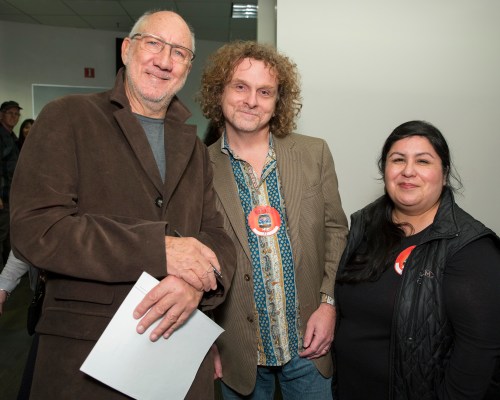
The Who Perform at Oracle Arena. in Oakland, CA on  May 19, 2016.

The Who Perform at Oracle Arena. in Oakland, CA on May 19, 2016.

** This blog from 2016 is likely my most popular, for reasons that shouldn’t surprise–the nice picture. Still, the story behind it is worth reading, if I may say so myself. It was poignant enough to include in an amended from in my 2019 book, The Psychology of Tommy: How a Rock Icon Reveals the Mind, now available through Amazon. But for now, from three years ago:

To my surprise, “Who Are You” was the first song of The Who’s set at the Oakland Arena last Thursday night. I was taken aback. Having attended several of their concerts over the years, and observed numerous set-lists from different eras of their remarkable fifty-year history, I had expected the familiar choppy chords of “I Can’t Explain”, or maybe “Substitute”—two mid-sixties gems to warm up the crowd. “Who Are You”, with its thoughtful narrative, reflecting the bands mature, late seventies outlook, seemed misplaced as the opening number; a reminder of a once concert-climaxing provocation. According to legend, the lyric recounts the story of a lost night on the town by its writer, Pete Townshend. He wakes up in a Soho doorway, a policeman knows his name. He says “you” (Townshend) can go home (in lieu of being incarcerated), if he can get up and walk away. The Who of this late seventies period were addled, about to lose Keith Moon, and struggling to keep up appearances as dignified, veteran rockers competing with up-and-comers, the emerging punk rock tsunami. The song reflects upon aging, being jaded with fame; feeling broken and undeserving of love. Its refrain poses a question—Who Are You?—that seems a cousin of “Listening To You” from Tommy, written several years earlier, only this time the creator/performer is not so much celebrating the feedback of listeners as much as he is staring back, at once bewildered and knowing, appealing for answers amid spiritual crisis.

Last Thursday, the fierce, youthful eyes of The Who’s original line-up—Townshend, Roger Daltrey, John Entwistle, Keith Moon—gazed out at the arena audience from a giant screen montage of the band’s storied career. Their eyes could see for miles, as their first American hit proclaimed in 1967. Their four distinctive, rock-prototype personalities seemed to look out over time, holding in their minds the dreams and expectations of their audience. With druidic presence, they performed a brutal yet playful music that set them apart from others of their era. Yet despite their bravado and bonhomie, they were ever more frail than we, the audience, knew or could tolerate. Waywardness, collapse, and mortality were always close at hand with The Who. As early as forty years ago, just a decade into a career they once thought wouldn’t last a year, there was already a casualty list, and a mooted retirement just around the corner. At that tired, apparently mid-career stage they seemed to check their purpose, looking to the crowd, to people like me, asking, what the fuck do you want? In 2016, time is truly running out, finally. “Who Are You”, a now relatively callow musing of a thirty something, might as well be an opening number, however relevant it may still be. Half the original band is gone. The remaining Who or Two are in their seventies. There are no new albums, rock operas or not, on the horizon. No more hits. Now it’s about playing for a legacy, and manifesting old rhetoric about caring, having a social conscience: hence a robust, charitable infrastructure, especially for its teen cancer trust; The Who’s heartfelt commitment to serving the age-group they once observed so astutely.

I arrived at the arena last Thursday in a bad mood. I’d had a tough week. I was tired, also feeling jaded, and my once fanciful belief that rock and roll can save the day was waning. The Who came onstage sometime after 8:30 in the evening and played for two hours. Another surprise was the lack of encore, but in terms of song selection, the performance, there will have been few complaints. As The Who’s ensemble band (Daltrey and Townshend, plus about a half a dozen others) left the stage and the lights came on, fans started trudging towards the exits, still feeling the concert high. I moved against the stream of traffic, towards the stage, where a cabal of security guards presided. I’d decided upon this action just as Townshend launched into “Won’t Get Fooled Again”, The Who’s traditional set-closer, and despite the surprises, my cue that the show was nearly over. You see, the concert wasn’t even the highlight of the evening. That was still to come, or so I thought. Three months earlier, six months since I’d sent a final draft of my Tommy paper to The Who’s management office in London, I received an e-mail from Pete Townshend’s personal assistant, saying he wanted to meet me. I’ve been alternately giddy and dissociative ever since, and that’s when I let myself think about it.

At eleven o’clock the moment arrived. Stoic security men directed me to the back of the arena, where the private room indicated on my pass was. This was the green room, or NIC room, whatever that stands for. Anyway, taking my wife’s hand, we moved with the crowd, exited the main floor, only to find ourselves in front of more security people, now herding most out the back passage while a few fans stood off to the side. This was the privileged group of visitors: special guest, VIPs. There was about two dozen of us shepherded down a second hallway to a pair of rooms, one inhabited by the band as a whole, the other—this ‘NIC’ room, off to the side—designated for Pete Townshend’s guests. Inside, the pleasant personal assistant named Nicola, with whom I’d exchanged e-mails earlier, welcomed my wife and I, gestured to a table of wine glasses, a fridge containing sodas, and invited us plus the ten or so other guests to relax, wait a few minutes, and Pete would soon be with us.

He appeared without fanfare, his back to me at first, his balding egg-shaped head unmistakable. Looking around at the assembly, gauging the energy, the quiet mood, I knew immediately that this meeting would not match my fantasy: it would last a minute, if that; it would feature a few words, platitudes about a great show (and it was), the years of pleasure and obsession stretching behind me—and a hand shake. The first people Pete spoke to seemed like music biz folk: those who worked on the road crew during the 1989 tour, or something like that. I felt out of place, being about as close to the music biz as an out of tune yodeler. He approached, looking weary, of course, and softly took my hand, saying ‘hi’ in a whisper. His personal assistant introduced us, as he didn’t know who I was. Who are you? I thought he might ask, and then ask it again, with attitude. In some ways it made sense, his torpor. He’d just finished a two-hour show, had given his all, as ever—the whole swinging arms, power chord all. He was, as my dad would say, knackered, and ten times more than myself, was not in the mood. Or, he wasn’t in the mood to talk about my paper, or Tommy, as he has done actually, repeatedly, for almost fifty years. But he asked to meet me, I can’t help thinking, also repeatedly. After a nice photo opportunity, a signature on my paper, a warm ‘good luck with that’, he turned and walked, ready to greet the next lucky fan. Have you ever met a celebrity, an idol—dreamed of such a moment, anticipated the moment as reality approached—and then experienced the aftermath: the point when you realize the moment is over?

I’m not sour. I’m not jaded. I have moods. I’m mildly disappointed, but I know what I’ve achieved and what I haven’t. I know who I am. I’m still hopeful. I still hope Pete reads my paper, because I don’t think he has. If you read this blog, I hope it moves you to buy my paper, give it a read. You might learn something about psychology, music, culture, rock and roll and what it, The Who, yourself, mean to people.

*Photo by William Snyder


Graeme Daniels, MFT


Leave a comment

Filed under Uncategorized

Poking ideology, ladies first


Whenever I consider a critique of a social group, an organization, or an ideology, I try to pause and think about where I am vulnerable; about who or what my sacred cows are, and whether I can take needling comments from the lesser knowing on the sidelines. I’m not a religious or especially political person (I think), so I don’t get my feathers ruffled when viewing debates. I am only thinly amused by scoffing comic journalists, and I sigh at the familiar rhetoric, bemoan all I don’t know or can’t know. As for miscellaneous activism, well, the AB1775 thing was about the only cause I researched well enough and thus felt qualified to comment on.

In most matters I prefer the observer’s role, plus the ethos of the neutral, hence my affinity for psychoanalytic thought, my periodic disdain for reductionist thinking in psychotherapy, as expressed elsewhere in this blog. Activism is an adjunct of psychotherapy for some. With a particular cause in mind, many enter grad schools wanting to “work with ___” because their lives have been touched by whatever their bone of contention is. That wasn’t me and it still isn’t. Mine is an ideology influenced more and more by the unknown, so the stance of the neutral radiates through Venus Looks Down On A Prairie Vole, my mischief novel about a jaded psychologist/neutral (or neutered) male, Daniel Pierce, who is stalked by a former prostitute and thereafter challenged to assume the activist role. Lira is a law student who likely saved money from her night job to earn an education and a better life for herself. She is an empowered woman looking back, looking to help the less fortunate, the not-yet-survived sisters on the streets, plus the odd John or two who needs redemption, whether they want it or not. Her ideology, which is a broader, not goal-specific construct, is likely feminist, though she doesn’t indicate this in such specific terms.

It’s difficult tackling an ideology because ideologies are multi-faceted and evolving. They defy simplification, require and deserve considerable thought and reading, so I’m skeptical of labels from those who identify with an ideology without putting in study time; from those who oppose an ideology based upon a similarly stereotyping process. If you haven’t combed through The Feminine Mystique by Betty Friedan, or “Beyond The Pleasure Principle” by Freud, or read anything by either Cordelia Fine or Melanie Klein, then stop with the broad-brush dismissals. So when Kirkus remarks in their review that Daniel Pierce is anti-feminist, I have to take issue because I don’t satirize feminism in my novel, but rather some of its derivative rhetoric that is co-opted by common opportunists, and which informs a modern narrative. Besides, I have to wonder what ruffled the feathers of my reviewer because he or she didn’t get specific. It’s certainly true that my narrator issues a few sideways jibes aimed at popular trends: at women’s seeming double standards in the dating arena; at the goading of men that happens in advertising: the suggestion that men should take drugs to enhance sexual performance, whether to serve ego, the pleasure of a wanting partner, or both; the way media increasingly presents women as sexual aggressors, men as on the run, clutching fearfully at their pants, acting like fools; the way musical/lyrical clichés are deemed misogynist if depicting women in supplicant roles—romantic or millennially winning if men are.

Daniel Pierce is traditionalist in some ways, but is neither an anti-feminist nor a misogynist. He’s monogamist, partly because of love, otherwise by constitution. Sexually, he’s played it safe in life while keeping at arm’s length the influence of promiscuous men, so he’s wary of Rick, the would-be porn star who buddies up to Daniel, liking his quiet non-conformism. Rick is aware that Daniel is not a player, but scarcely registers the psychologist’s critique of reckless sex. Daniel could give or take guys like Rick, knowing them to be endangered, but he’s more concerned for his own psychological kind: the sexually diffident or undersexed; the workaholic, drab men who sacrifice decades to the man and then die of heart attacks. If pushed he’d point out that if women want the same pay or workplace opportunities as these men, they may need to do more of the work his masculine forebears did: the blue collar or dangerous jobs that still comprise well over ninety percent of workplace injuries. Let us not forget that the harbinger of feminism, the suffragette movement, more or less suspended itself to support men in their most dangerous traditional role, that of soldier. Subsequently, World War I slaughtered nearly half of the European male population of that era, which is not women’s fault, but what did they do? Time moved on: women organized and confronted the alcohol industry with temperance movements, industrialists about child labor; they rightly won voting rights, the right to own property, etcetera, while never having to register for the draft, and few women over the years complained about that.

When pushed by Lira to co-sign her assessment of Derek Metcalf as a child molester, Daniel pushes back, supposing that the child in question (Derek’s five year old son) may be a pawn in a protracted custody dispute, latterly mired in manufactured charges, coached and inconsistent reports from the son about alleged behaviors, the adjudication of which is meant to leverage a favorable custody outcome for the mother. While Daniel’s familial background is thinly sketched in Venus, I suggest towards the end that his father was not a Prairie Vole (a monogamist), and that Daniel’s mother, a figure on whom he once doted, left his father at some point in Daniel’s childhood. On the one hand, I accept Clarion’s critique that my title, Venus Looks Down On A Prairie, may be too obscure, or confused, for the average reader. I’d intended to give clues in the text, but otherwise leave room for you to wonder. Well, I guess I’ll supply an answer, whether you wonder or not. Daniel is looked down upon by women (or would be so), not because he’s a philanderer and therefore commonly misogynist (he’s not), and certainly not because he was a devoted husband, but rather because he isn’t a hero. He simply refuses to split in that traditional way. His refrain, I don’t do anything, is partly a complaint, partly a muted boast, and he defies a traditionalist male role that lingers in our society, whether feminists want this or not.


Leave a comment

Filed under Uncategorized

Latest review


https://www.forewordreviews.com/reviews/venus-looks-down-on-a-prairie-vole/


2 stars…hmm. Maybe I’ll try a children’s story


Leave a comment

Filed under Uncategorized

Talkin’ about it


Leave a comment

Filed under Uncategorized

The ins and outs of porn


Nothing like a little innuendo to start a blog that is both serious and comic in nature, but if you’re waiting to read about best porn sites on the internet, you’ll be greatly disappointed, for this entry is about as anti-porn as it gets, ironically. This entry is all about the written word and the long narrative—things porn dispensed with almost from the get-go of its existence.

Reviews are available of my porn-on-the-periphery novel, Venus Looks Down On A Prairie Vole: mostly lukewarm responses from the likes of Kirkus and Clarion, who seem to regard my writing as competent, if unremarkable, but take issue with my central character, thinking him unlikeable, a drag upon a worthy cause. The only thing that’s surprising is their reticence. You’d think reviewers would spend a bit less time/print giving synopsis; a bit more time reviewing prose, plot or character development. Daniel Pierce, my protagonist, is indeed an unhappy guy, as the Clarion reviewer points out. He is perhaps arrogant as Kirkus observes. But I’d expected to read more about why reviewers think this, and beyond that, to wonder. It’s strange to me that while people in my profession are used to seeing beyond defenses into what’s inside another (in other words, observing that which is not expressed explicitly), readers expect conscious endeavor, and reject characters who won’t say what readers want them to. In writing Venus, I knew I’d annoy progressives with my teasing of feminist cliches, what I think are tired attacks upon porn. I’d expect disapproval from 12-step adherents, who may not care for my lampooning of drug treatment, or the casual misuse of recovery principles. Both these factions, plus old school paternalists—everyone—might resent my implied sympathy towards sex offenders. As Daniel observes towards the beginning, you the reader might not like what he’s about to share.

Of all these contentious themes, porn gets the spotlight today. It’s in your face, as Daniel comments. Here’s a sample from the text:

“You see, in sex, real sex, not porn sex, eyes are the thing; the personal center. I know because I don’t have great eyes or facial symmetry, which hasn’t helped my pursuit of sex—well, except when light flatters me, when no one is around to look. I wish it were different, not that I want more sex these days. I just wish I knew what makes a pair of eyes great. When I hear people say, “so and so has pretty eyes”, I always wonder what they’re referring to, because compliments tend to be unspecific. Is it the color, the shade, or size, or what my mom, my first gal, used to call “the shine” that dots the pupils? The women of porn stare into cameras seducing viewers with their eyes, big pupils and all, plus their dirtied personalities, looking undignified, yet ambiguously powerful; ambiguously not, I guess. They say—some say—that the women of porn are in it for the power, the sexual power, not the money. Are they? I don’t know, though if you ask me, no one’s coming out of porn looking or feeling their best. The real issue—the real offense to the egalitarian way—is the air of servitude, for what porn really does is arrest women into roles of pleasing. Don’t agree? Go watch some porn”

Actually, eyes are secondary. The penis is the star—the object, if you will—of porn, Daniel remarks, adding that they are in our faces, and “literally in women’s”. These are examples of his flippant, crude armchair views, and a portent of more earnest commentary later on in the story. Venus echoes an argument I first read in Martin Amis’ Money, written thirty five years ago when porn existed only in magazines or in seedy, downtown theaters—maybe videotapes. Money is a masterpiece of gritty, maverick literature. In it, a character (Amis himself, actually) says to John Self, the protagonist, that pornography objectifies women and men equally. Self, a debauched porn addict himself, jovially disagrees, saying that men don’t or wouldn’t mind being so objectified, especially for money (his stand-by argument about everything). Amis rebukes this assumption, claiming he and most men wouldn’t have sex for money, thus pointing out that all involved in porn are exploited. Lira, my women’s advocate/former prostitute in Venus, argues that whatever exploitation of men exists in porn is irrelevant, as men are the dominant consumers. Daniel retorts that if the consumer is the oppressor, then we are all oppressors in our consumer society, and that scapegoating sex for the problem of exploitation merely exposes western prurience.

This is not to say that he’s a fan of porn. In fact, he finds it cold, cynical and narcissistic, though he shamefacedly indulges on occasion when feeling disconnected. But like myself, he’s wary of the righteous; distrustful of zeitgeist opinion, well-marketed, sound-bitten ideas, and therefore has a soft spot for the demonized consumer. This leads him to work with sex addicts in his practice, and with some sex offenders, though he demurs on most cases mired in a legal process. Meanwhile, serendipity places him the company of Rick, ostensibly a chef whom Daniel meets when working shifts at a restaurant during his practice-shedding hiatus. Later, it turns out that Rick is a budding porn actor who goes by the name Kane Able, a typical double entendre slapped on for parody’s sake. So, too, are some scenarios that are common to porn’s semi-theater: the fireman or policeman skit-gimmicks, enacted with thin, tongue-in-cheek pretense, which play upon themes of heroism, damsels in distress and the pull for male sacrifice; abuse of authority, plus the chance to fashion dialogue replete with daft innuendo, silly plays upon words. As a result, Venus is filled with plays upon words, at times mimicking the artifices of porn; otherwise providing a kind of parallel script alongside the action.

Amidst all of this, Venus drops down into a serious contemplation of sex and gender politics. In its subtext it observes a shift in mores, from the castigation of female sexuality, to a back-handed latter-day quest for more freedom, but to what end? For men, the freedom train is heading in the opposite direction. Former license(s) is being revoked, yielding more punishments, weaker performance, and more anxiety, even as advertising media goads them to take the same old risks. Porn offers a kind of refuge to those who are not sure that sex, as in regular intimacy-enhancing, not-paid-for sex, is worth the effort or the risks. With respect to this problem, Daniel Pierce is an outsider: he’s too old to have known the ubiquity of porn prior to his marriage or to have experienced dating as the online shopping exercise it currently is. In a sense, he is safe from contaminated society, but still he is adrift, a closet romantic largely suppressing comment but now seizing a moment with an unlikely listener. Lira listens well enough, but like my reviewers, I think, doesn’t really connect with him. I realize that’s what Daniel Pierce’s story is about: a lament for what is missed.


Leave a comment

Filed under Uncategorized

Tommy


No essay, just a link. Check it out…


http://cap.sagepub.com/content/22/1/94.abstract


and read the following blogs: “Ever since I was a young boy”, “Your mind must learn to roam”, “You didn’t hear it. You didn’t See it”, “Listening to you”

Leave a comment

Filed under Uncategorized

About reviews, popularity

Ever get the feeling someone’s trying to tell you something by not telling you something? Psychotherapists (that identifier feels awkward for some reason) have to learn to interpret the unsaid, by thinking about non-verbal information: everything from muted sighs to averted glances at a hidden clock, to I’m-running-late text messages, belated vacation or business trip announcements; e-mail terminations. Relationships in some people’s lives end with tumbling regularity. Exchanges are transient. Promises are easily given, and more easily withdrawn or better yet, forgotten. If you wrote it down, good for you. Kudos for the documentation, signifying that something meaningful happened.

I don’t spend a lot of time documenting psychotherapy, largely because it makes for dull reading, the type of notes one is meant to write for nosy overseers. It makes for good stories however, not that I can lift them directly from my clients’ shares. Instead, it’s an exercise in grabbing at pieces, tossing them at a blank page, worrying later about the links. For my first four novels I’d picked sketchily from my clients’ backstories, preferring to represent moments, unidentifiable fragments of individuals’ lives, maintaining everyone’s confidentiality. Except mine, of course. It’s several years since my first effort, the much somethinged Living Without Blood, about somebody named Eric Metcalf and his friend Richard something else, coming together after years of gradual estrangement in order to…actually, I’ve forgotten what they did together. I loved LWB at its time of publication—2009. It was my first-born: a sloppy, muddled beginner trying to find its legs after a nine-month labor, but occasionally standing tall, inspired by a self-consciously prosy flow. Skip to 2012: the release of Crystal From The Hills, a picaresque adventure that I’d conceived as a 600-page novel, only to split the story in half, releasing its follow-up, The Situation, two years later. Crystal took three years to write, in sporadic bursts in between semesters of my post-graduate training program at the Masterson Institute. Written three times, suffered over like a still-birthed thesis, it was my best effort thus far I thought, and I was confident enough of its value to submit a manuscript for review, with Kirkus magazine, a reputed den of literary cognoscenti.

Kirkus didn’t like Crystal From The Hills, calling it “sprawling”, “meandering” (a reference to its many flashbacks, childhood background material to make John Bowlbyesque sense of my protagonist’s disturbance). I got my first real taste of a reviewer’s, and presumably an average reader’s distaste for disrupted narrative, impatience with detail. I learned that some might find my prose difficult to read, for it was “ponderous”, “stacking of clauses and syllables”; containing way too much minutia. Gee, had they ever read David Foster Wallace? There wasn’t much complaint (from Kirkus) about the plot as such, or about character development—rather a suggestion that readers prefer heroes to be heroes, or at least charming, as opposed to being self-absorbed underdogs, or as one reader put it, losers. Ironic, for the novel’s underlying theme was empathy, so I did indeed fail in my task. I absorbed the criticism graciously, I think, noting that for my modest investment I’d received more honest feedback in two paragraphs—indeed more feedback, period—than I’d received from most non-paid (friendly or not) readers over the previous three years. Seriously, outside of the odd sympathetic review posted on Amazon, my readers, which include one loving family member, plus a rough crossection of my friendship circle, have given me little interest over the years. Some of them don’t care for psychodrama, preferring sci-fi, fantasy, non-fiction, or pleasant yarns about dogs or foreign travelogues. I think some struggle with the opening pages of my books, are left sucking oxygen within minutes having regarded my prose as if it were like the text of vacuum cleaner manuals. Most think that theme is subordinate to plot, which I agree with to some extent, except that some just don’t register ideas, only action. And some just don’t read. Period.

Oh well.

The effort to engage strangers moved on. The Situation received a warmer review from Kirkus, as in lukewarm, with concessions that it contained less of its predecessor’s flaws, as in less background material, less “meandering” plot. This was a somewhat hollow non-criticism, as the novel was a sequel and therefore did not require much backstory. However, other elements, like theme, the relatively fast pace or crisp prose, plus what I thought were clever plot devices (For example, Crystal’s opening, “He’s dead”, regarding a referenced character named Weed, is mirrored by Weed’s opening line of Situation: “I’m alive”. Reaction from Kirkus: nothing). Clarion/Foreword reviews didn’t notice this and other plot tidbits either, but otherwise offered a glowing review of The Situation, giving me four stars out of five, and remarking that my text was “captivating”, my writing assured; the story humorous, adventurous and fast-paced: gratifying, if not quite redemptive of the story as a whole. Kirkus’ reticence continued to irk me. I held the impression that their reviewer was holding something back, thinking my novel worthwhile but not wanting to say so.

This idea was reinforced earlier this year by their latest (and likely the last I’ll solicit) review, for my new novel, Venus Looks Down On A Prairie Vole. I was cautiously optimistic this time, half thinking my third submission would be the charm, otherwise simply believing my latest novel is pretty damn good. Alas, it was not to be. Upon providing a typically competent synopsis of the plot and a begrudging recognition that I was “drawing attention to an important issue”, Kirkus then complained that my protagonist, the sarcastic, at times pathetic Daniel Pierce, is not likeable. No kidding. According to them, he is pompous, contrarian (like that word, actually), and anti-feminist—a problem, apparently. Actually, as a therapist he’s resolutely neutral: a Bionion depository, as he puts it, “lacking memory or desire” (a famous Wilfred Bion quote). Outside his office he’s not so much anti-feminist as anti that which co-opts platitudes for self-serving aims, which is why he might be unlikeable. I suppose that negativity is not likeable, which I further suppose depends upon point of view. Anyway, it should tell me something, this reaction: something I’ve known at least since high school: in this world, in nearly all endeavors, it’s not enough to be good. BTW: my novel is damn good! But here’s the thing: you have to be liked.


Leave a comment

Filed under Uncategorized

Names matter, don’t matter


They do if you give them up. Daniel Pierce is a seasoned psychologist, presumably trained to maintain the confidentiality of his patients, or clients as he sometimes calls them. It’s the most important thing he does, he says, and he doesn’t do much. He gives the reader his name, plus that of some others, people who don’t require or deserve the privacy, but otherwise names are a problem. People’s names, place names: they don’t matter, or they are anonymous. My novel, Venus Looks Down On A Prairie Vole, places confidentiality at the center of a host of themes underpinning its plot: that of a jaded counselor taking an impromptu hiatus from his practice, but thwarted in that effort by a stalking ex-prostitute who wants information about a patient whom she says has sexually abused a child. BTW: this ‘thwarting’ was a main reason the novel was originally called Blocked. The blockages are all around: her blocking of his escapism; his blocking of her social intervention; the internal blocks that Daniel Pierce suffers from, that…well, maybe you get the idea.

Daniel is reluctant to give it up, this information she seeks, but he strings the woman along, hopeful of a diversion to juice up his drunken life; or perhaps he’s intrigued by a strange opportunity. See, he’s met numerous people over time who are similar to Lira, the seductress who takes him to a bar, then to her home, and then upon a ride-along through an alternative world-view, that of an activist. Like many unctuous members of society, she wants Daniel to violate his neutral position, the trust that one of his patients has placed in him, in the service of protecting society, and specifically children. But it doesn’t work like that, Daniel rebukes. In fact, he declares that such cavalier heroics will do more harm than good, impinging upon efforts to prevent child abuse rather than the reverse. He articulates, of course, something I believe: that if our profession is going to help understand child abuse, we have to give its perpetrators reason to speak to professionals. And I mean speak to us, not comply with us. That means maintaining privacy when hearing that which turns the stomach. As far as authorities are concerned, it means not naming names.

Daniel Pierce wasn’t always so inclined to protect devils in order to further understand them. One of his background jobs was that of a group home director—a man in charge of delinquent boys, who keep secrets as well as any therapist, and punish violations of confidentiality more severely than the board of behavioral sciences ever does. A passage depicting efforts to out the identity of a house assailant reveals Daniel as a kind of one-time policeman: a house heavy and dad, lecturing young criminal minds about the importance of standing by the innocent; about not protecting wrongdoers, by giving up their names to those in charge. Daniel’s youthful adversaries managed to disillusion him, by reminding that for many, loyalty is more important than justice; that protecting friends and other loved ones is more compelling than doing right. Now it’s sometime later and Daniel Pierce is not so sure about who is innocent and who isn’t; about who are the abusers, or the oppressed. This is partly because he feels like one of the oppressed, which is hardly surprising, topically speaking. His political leanings unclear, he could be a supporter of either Donald Trump or Bernie Sanders: marginalized, confused, and looking to blame either a subset of society or its entrenched institutions for the messy world he’s a tiny part of.

On balance, his biases are progressive, but above all he’s isolated, seeing hypocrisy, shallow rhetoric and contrived solutions on all sides of the grand social split. He’s alienated, fed up, and tired of social advocates in particular: bleating feminists on the left, blow-hard paternalists on the right. Grieving the loss of his one and only love of his life, and estranged from his son, his only child, he’s in collapse, sliding along a path towards a bottom out drinking experience until this one woman appears, like a seraphic breeze with a provocative mission. She says Derek Metcalf, Daniel’s patient, has committed a horrible crime, and that Daniel can and should help him to confess, if not report that event if it’s already occurred. Daniel is non-committal, neither agreeing nor disagreeing with Lira’s plan, or its premise, and privately holding that he doesn’t know much. Like many troubled drinkers, he doesn’t remember much. Actually, he doesn’t even remember (partly due to his alcoholism) ever seeing a patient named Derek Metcalf. The profile Lira gives him sounds a bit like a man named Andrew, who came to see him once, flitting in on a bicycle, discussing a sordid life of street drugs and prostitutes, appearing and later proving elusive, for he too is on the run, escaping from his life, operating incommunicado, living anonymously, having sex anonymously; explaining that his name, where he’s from, where and who he is at any time doesn’t matter. Only it matters.


Leave a comment

Filed under Uncategorized